
International | Mar 31 2026

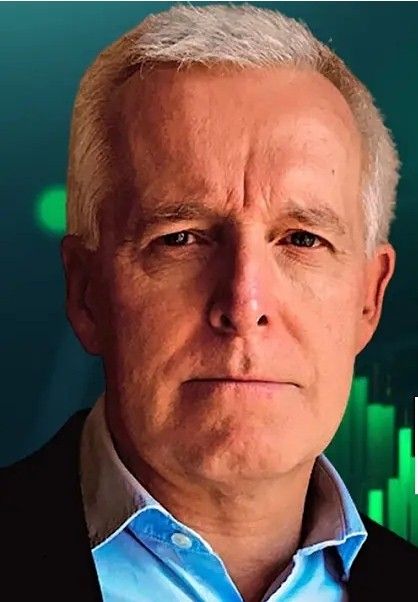
Michael Howell recently sat down with FNArena in London to explain global liquidity, where it is in the cycle and how investors should be positioning in light of the cycle.
By Danielle Ecuyer
Michael Howell, founder and managing director of CrossBorder Capital, chatted with FNArena in London about global liquidity, its impact on asset markets including equities, gold, bonds and commodities.
Michael also expanded on where liquidity is in the cycle versus the longer-term trend.
Below is a curated transcript of the interview which is available at
https://fnarena.com/index.php/fnarena-talks/2026/03/26/global-debt-liquidity-refinancing/
and/or
https://www.youtube.com/watch?v=YZaEq4hwdEg&t=19s
The interview was conducted on March 24, 2026 in London. The video was released two days later.
Why global liquidity matters to investors
Michael Howell: I think it’s worth drilling into what it means and why it’s important. The fact is that markets are moved by money.
What investors need to try and understand is that flow of money. We track money flows through world financial markets, which is what we call global liquidity. Liquidity moves markets.
The big change that we’ve probably all witnessed in the last, 30, maybe even 40 years, is that money flows in markets have come to dominate price movements.
Understanding investment now is not so much about going down to the micro or drilling into what is the value in a particular stock or security, it’s much more about understanding these money flows, what big investors are likely to be doing.
The list would include hedge funds, sovereign wealth funds, and central banks.
At CrossBorder, we monitor their participation or transactions in markets and track these movements around the world.
Interviewer: Are you highlighting you’re not just talking about changes in interest rate policies between central banks, your analysis goes much deeper?
Michael Howell: Yes, exactly. The key thing is to ask: what do interest rates really mean?
And that’s a puzzle. I scratch my head and don’t really come up with a sensible answer. If you go back to what the textbooks would tell you, they will say you’ve got a regime where households are in surplus. They’ve got surplus savings.
The corporate sector has got capital spending to undertake, it’s in deficit. It borrows from households, and, essentially, interest rates are the arbiter between the two. That makes perfect sense.
The trouble is we don’t live in that world anymore. We live in a world where the entire private sector is in surplus. Corporations are sitting on big cash piles. They are going to invest whatever, regardless of interest rates.
The big deficit sector in the economy is the government sector, and the government is basically transferring interest payments to the private sector, because it is in debt, and therefore, if interest rates go up, in theory, private sector incomes go up.
You can argue the complete reverse of what the textbooks tell you. Higher interest rates are a source of stimulus, not a source of contraction. And that’s really the puzzle we’ve got; the whole world has turned topsy turvy.
The other thing to think about is capital markets today are not about raising capital for new investment projects. The only large scale investment that’s been going on, frankly, is in China, and interest rates are not really the thing that determines the investment cycle in China.
So, what are financial markets doing in the West?
They’re principally refinancing the huge debts we’ve got, and those debts basically need liquidity, or balance sheet capacity, to be rolled over, and that’s why monitoring liquidity is really crucial.
Huge global debt underpins need for liquidity to refinance
Interviewer: Can you add some numbers around the extent of that debt that needs to be refinanced, and how soon it needs to be refinanced?
Michael Howell: Worldwide there’s about US$350trn of debt. It’s mind blowing. It’s a huge amount. And you think world GDP is about US$120trn?
You’re talking about pretty much three times, which triggers a large amount of debt to refinance. The pool of global liquidity is touching US$200trn.
It’s big and, broadly speaking, what we need is a ratio of about two times for financial stability.
In other words, you need two times debt per unit of liquidity to mean the debt gets refinanced. If you’ve got a US$350trn stock of debt, and you assume the average maturity of that debt is about seven years, you’re talking about US$50trn a year of refinancings alone.
This is obviously a gross amount, but it’s on top of what net debt is being taken up as well.
You’re looking at a debt pile that is just basically turning over enormously every year, and capital markets are basically swallowing that, and they need liquidity to operate.
If you don’t get the liquidity and if the debt liquidity ratio skews away from its normal levels of two times, you see financial crises when it’s too high, and you see asset bubbles when it gets too low.
Interviewer: We’re going to have a potential change at the head of the Federal Reserve, Kevin Warsh, and he’s been quite vocal, as has Treasury Secretary Bessent, about shrinking the US government balance sheet. Is it a more ideological rather than a practical thing they’ll be able to achieve?
Michael Howell: Correct It’s pure nostalgia. The fact is a lot of these policymakers grew up with small central bank balance sheets. I think you can understand the sentiments of the US administration, saying maybe the footprint of the Federal Reserve or the remit of the Federal Reserve seems to have grown enormously, inordinately, maybe because they tend to be going down many different rabbit holes rather than doing what they should be doing.
I kind of sympathise with that.
But the fact is you need a big financial sector balance sheet to roll this debt over. And what governs, or who governs, the size of the financial sector balance sheet?
It’s the central bank or, in this case, the Federal Reserve.
If you look at the math behind this, what you’ve got is federal debt. But the main role of the central bank is not about inflation fighting or about employment. It’s all about maintaining the integrity of government debt.
They need that sovereign debt market to function, and believe me, if there are any problems, central banks will come in with alacrity.
Now that is a big ask, because the size of the federal debt pool has grown five times since the GFC. So, this is a big change, and the dealer capacity of the market has probably halved.
In other words, banks have reduced the size of their dealing operations, which means the Federal Reserve is already on the hook time and time again whenever you get dislocations in the markets.
The problem as well is we’ve had, on top of the covid crisis, since the GFC crisis, collateral become really the centrepiece of lending markets.
Close to 80% of all lending in the world economy now demands some form of collateral. That collateral is typically a US Treasury bond. That’s the main form of collateral that financial markets tend to operate with.
In other words, to borrow from a dealer bank, you need to post Treasury collateral, and they will give a haircut to that, and you can borrow.
The haircut may be, let’s say, for example, if you post US$1,000 of debt, you may get a haircut of 10%, which means you can borrow US$900 from the bank. That haircut will vary according to conditions, but the whole process of using collateral means the system is increasingly pro cyclical.
What you’ve got is, first of all, a bigger cycle, and secondly, you’ve got smaller capacity among dealer banks, and therefore the Federal Reserve is on the hook more and more. That’s why you’ve got to have an active Fed and a large balance sheet to operate with.
The whole idea of shrinking the balance sheet is nostalgia. There is some talk or debate about whether the Federal Reserve can actually shrink its balance sheet because bank regulations have changed dramatically, which means the banks don’t have to hold such big cushions against volatility.
They can do that, but by doing that you’re actually inducing more leverage into the system for the sake of actually getting a smaller Fed balance sheet.
That doesn’t seem to be sensible policy making, as far as I can see.
Demand for collateral supports US Dollar via Treasuries
Interviewer: Does the use of US Treasuries as collateral push aside or negate the argument that the US dollar is in terminal decline?
Michael Howell: Yes, it’s one of the factors that really supports the dollar, that’s for sure.
But I think generally you’ve got a sort of network effect globally, which is really supporting the dollar. One of those pillars, if you like, to mix my metaphors, is the Treasury market.
So absolutely. The fact is everyone uses Treasury collateral. The dollar is integral. And there’s really no alternative. No other country has a deep financial market, or one as deep as the US.
China, which people often cite as the potential rival of the dollar, has capital controls.
There’s no international footprint for the Chinese bond market. It’s big, but it’s domestic.
Is the tide going out on the liquidity cycle?
Interviewer: What point is the global liquidity cycle currently in?
Michael Howell: The fact is, before the Iranian crisis, liquidity was beginning to go down.
The cycle peaked around the third quarter of 2025, so we’ve probably had, what, three to four months of absolute drops in the liquidity cycle. I should stress the liquidity cycle represents, or is defined as, a rate of growth.
The reason for looking at a rate of growth is the financial market is typically priced at the margin, so if you see slowing growth of liquidity, that tends to be crucial in terms of driving asset prices.
What we’ve already seen is markets labouring in the run up to the Iranian tensions. They’ve clearly dropped the prices. But the fact is that this is an ongoing process, and liquidity, as far as I can see, is not going to come back quickly for several reasons.
One is central banks don’t seem to be too inclined to ease right now. The bond markets, I think quite correctly, are beginning to sense central banks may be tightening.
The Reserve Bank of Australia has already raised interest rates. The Bank of Japan is wanting to push rates up more. The ECB is talking about higher rates, and bond market investors are beginning to discount higher terminal policy rates across the term structure.
I think we’re in a period where it’s very unlikely the central banks will be able to ease, despite that being very high on the wish list of the US administration, I just don’t see how it’s possible.
The other thing that’s biting into liquidity is we’ve got two other calls on liquidity.
One of those is higher oil prices. The question is: how high can oil prices go?
We put a piece out on our CapitalWars SubStack (https://capitalwars.substack.com/?utm_source=global-search) a week or so ago that said it looks quite scary.
For example, take a gold price of about US$5,000/oz as a starting point. I know it’s lower than that now, but let’s assume that’s an equilibrium or a fair value.
Over the long run, the gold/oil ratio has basically averaged about twenty times. In other words, it takes one ounce of gold to buy you US$20/bbl of oil.
If you look at that ratio, that’s been true through time, and go back to 1970 oil prices, about US$2/bbl, and the gold price was US$35/oz.
So about 20, and you go through time, you’ll see how that works out. The fact of the matter is that if you take US$5,000/oz of gold, and that 20 times ratio is intact, as it has been over that long term, you’re talking about oil priced at US$250/bbl.
We presented to a client about 10 days ago this idea, and they said, “Well, you’re just insane. That’s never going to happen”.
My point is, well, it’s simple maths, and via triangulation either the gold price is wrong or oil is.
When I hear the gold price is coming down, how far is it going to come down?
If the gold oil ratio assumption is wrong, why should it be different this time? Or the oil price projection is wrong.
So, one of those three just doesn’t line up, and that’s really the question to deal with.
My view is that the gold is pretty much underpinned by the monetary inflation that is being enacted generally by policymakers, because they must finance this huge debt, and they’re going to need liquidity to be pumped into markets to do that.
The gold price is a very good barometer of that, and that extends not just across the West. It also applies to China. It probably applies more to China than anywhere else as they need to print money, and the gold price is elevated.
The Chinese are buying gold, we know that. The other question is that, on top of a high gold price, what you’ve got is commodity prices generally lifting.
This is not just a gold and oil phenomenon. All these things are moving, so I think we’re in a period where commodity markets are going to get a significant uplift over the next few years.
This looks to me remarkably like the 1970s.
The fact is you’ve got a situation where inflation, commodity inflation, at least, is going to be pronounced over the next few years.
Global bond markets sending a signal to investors
Interviewer: The cure for higher prices is high prices, what trends are being indicated by the bond market and the term premium?
Michael Howell: I’m going to be caught in the weeds of it, because term premia is a sort of wonkish idea.
People’s eyes normally glaze over when bonds come up in discussions. The fact is there’s a lot of information in the bond markets, and we ought to pay attention to it.
If you think of a bond yield, it basically consists of two components.
One is an expectation for interest rates by policy makers. In other words, what the Reserve Bank of Australia or what the Bank of England or what the Federal Reserve is going to do with policy rates.
The other element is a risk premium, which is called a term premium, which basically is the risk premia that compensate you for holding interest rate risk over the term of the bond. It’s called a term premium.
Typically, you’ve got those two moving parts, and it’s important to differentiate the two.
If you look at what’s going on in bond markets right now, what you find is that interest rate expectations are rising significantly across all global bond markets, and term premia are dropping in all global bond markets, apart from the Asian bond markets.
There may be something different going on there, but Japanese term premiums still seem to be rising, and Chinese term premiums still seem to be rising, but in the West, in Australia, what you’re looking at is term premium dropping.
That is indicating investors require a smaller risk premium to hold bonds. It is telling you there’s an increasing appetite for government debt, and that is a shift towards safe haven investments.
What the bond market is telling you, and reading through the nonsense a lot of journalists are putting out, which is saying there’s a big bond sell off, and this is the end of the world, the fact of the matter is that what the bond market is telling us, is effectively, there is declining risk appetite among investors.
Risks of a sharper liquidity drawdown
Interviewer: Does that signal there are potential strains and stresses in this financial system that potentially can go to, let’s say, a sharper liquidity drawdown?
Michael Howell: Yes, there’s absolutely no question. The other thing we’ve got to think about on the horizon is the debt maturity wall.
The debt maturity wall is a situation or concept that describes the amount of debt that is coming back into the system that needs to be refinanced.
If you go back to the covid crisis in 2020, what happened then was interest rates were slashed near zero as a way of digging ourselves out of that emergency.
The problem is interest rates incentivise people to take on more debt. They also encourage what’s called a terming out of debt.
So, if I’ve got a borrowing that is likely to come due in the next year or so, and I’m paying 5% interest, inspired by a 5% coupon on that, if I can refinance for zero or near zero, I’m going to do that.
What happened in the covid emergency was a lot of borrowers termed out their existing borrowings to later this decade, so you’ve got this huge bunching of debt that’s going to come back, and that’s what’s called the debt maturity wall we’re facing.
Financial markets have got to scramble up that wall somehow in the next two or three years, against the backdrop of increasing tensions in geopolitics, and a backdrop where inflation may be rising and where central banks may be deciding they’re going to put their foot on the brake.
There’s an old saying in Ireland that to the lost traveller, if you want to travel to Dublin, don’t start from here.
That is really the point for central banks or policymakers. This is a crazy place to start from, but this is where they’re starting from.
They’ve got to try and negotiate higher inflation risks, which means they’ve got a tight monetary policy. At the same time, the financial system is repeating this rapacious need for liquidity to refinance debt, and one of those is not going to work.
Real world economy a drain on liquidity or not?
Interviewer: What impact is the investment in artificial intelligence and infrastructure spending in the real world having on global liquidity?
Michael Howell: We say that ‘all money that’s anywhere must be somewhere’.
If it’s going into the real economy, it’s coming out of financial markets. It can’t be in two places at once.
The fact is you’ve got this huge AI spend. Now, if you sort of go back a year or so, a lot of these big tech companies were sitting on huge Treasury balances, otherwise big cash piles.
Those cash piles have actually been drawn down significantly, and a lot of these AI or tech companies are moving into a regime where they may be net cash flow negative, which is a whopping great change to where they were 12-18 months ago, and that means they’re going to be demanding more funding from markets.
If you look at the new funding demands on top of the existing funding demands for rollover, you’re looking at a lot of strain coming through financial markets.
I touched on the fact higher commodity prices, and particularly higher oil prices, are going to drain liquidity as well. But the fact is the energy sector, and particularly the oil markets, use a lot of liquidity.
Just think of the amount of working capital tied up in things like freighting oil in tankers. I mean, this is big money, and you’ve got to spend on top of that for new infrastructure, for energy that’s been destroyed.
You’ve got to pay for this irony of war that President Trump has triggered, which is more and more demands on capital markets.
The amount that’s left over for asset prices to go up is being shaved all the time.
How to position investments against a decline in liquidity at the margin
Interviewer: It is quite hard to find a rosy outlook, what am I missing?
Michael Howell: Well, I think the thing is, where do you find the safe havens against this backdrop at the moment, given the backdrop can flip at any point, the war may be over, but as you said, the investment spending still has to come in, particularly since then, so much destruction.
What this tells us is there are two dimensions to markets.
One is a cycle, and that cycle can be vicious, and we’ve seen that many times in recent years. What goes up always comes down.
There’s also a trend, and that trend is dominated by liquidity and by what we call monetary inflation. That is the only way out for governments right across the West and including China.
Commitments have been made to welfare states, which means governments are basically bankrupt around the world. And of course, the government never goes bankrupt, because it can always tax us, but how high can taxes go and what do interest rates have to jump to?
That’s really the question. The route they’re going to take is probably printing money in the old-fashioned way, and that’s kind of happening already.
You’re seeing more and more evidence.
It’s certainly true in the US, but it’s true here in Britain, it’s increasingly true in Japan. Governments are going to the short end of the market to issue their debt.
In other words, they’re not issuing 10-year debt. They’re issuing bills of three months or six months.
In terms of public finance, this is madness, but it’s going on, and the reason it is madness is they’re very vulnerable to changes in interest rates.
If interest rates suddenly jump, their interest costs jump as well, and the whole debt problem then becomes exponential, and you get this skyrocketing amount of debt.
It’s not a great policy, but it’s happening now. That is the reason I say this is monetary inflation, and we’ve got to be careful about that.
One of the key questions to ask is: who’s buying that debt?
The answer is: it’s typically banks.
If banks fund government debt or banks buy any debt, it’s called monetisation.
In other words, it’s printing money, and this is what’s happening before our eyes.
The whole idea of going to the short end of the market to fund is a reaction to the fact it is easy to do, but it’s because the banks have got this big appetite to buy government debt because it matches their liabilities almost perfectly. They’re big buyers.
Governments are now effectively printing money, and this is creating monetary inflation, and we know that never ends well.
How do you avoid that?
You’ve got to look through the cycle. Don’t try and trade monetary inflation hedges, own them, and that’s really the key thing to do.
So don’t trade gold, own it. Don’t trade high quality equities, they’ve got pricing power. Own them, because they’re going to come through this well, okay, but what you’ve got to do is avoid some of the more speculative assets that have been pushed up in the so-called “everything bubble” in the last few years.
Interviewer: If there is a forced liquidation of assets including precious metals like gold, should investors be buyers?
Michael Howell: I think unquestionably you’ve got to own gold. Don’t worry about trading it. And if you want to accumulate gold, do so during some weakness.
I think the rule, and this applies to Bitcoin as well, is, you’ve got to look at the trend in these assets.
Bitcoin is probably a decent hedge, certainly proven that in the last 15 years. Gold has proved that over 5000 years, so it’s got a much better track record.
The fact is, you’ve got to buy these monetary inflation hedges when they’re below trend.
Look at what the trend is. Just put a 200-day moving average through a chart and buy when it’s at least one standard deviation or circa -20% or so below that trend.
That’s a reasonable long term investment strategy.
Duration on average of the liquidity cycle
Interviewer: In terms of the liquidity cycle, typically, how long does it take to play out between peak and trough, in terms of the historical analysis you’ve done?
Michael Howell: The liquidity cycle, per se, is roughly about five to six years long. The debt refinancing cycle is what is really controlling liquidity.
That cycle bottomed last time in October 2022, it peaked in, let’s say, September/October of 2025, it’s likely to be falling through 2026 and may make a turn in 2027, so you’ve got some sort of perspective as to how long this may last, and I think it’s going to last well into next year.
Even regardless of looking through the Iranian conflict, we’re already in a downswing for liquidity and what must be more defensive and much more selective investments.
That’s why you need an active asset allocation.
On top of an active asset allocation, separate your portfolios into core holdings and into tactical overlay, which corresponds to the cycle.
Cash, Gold and Stablecoin
Interviewer: How important is cash now for investors?
Michael Howell: Very important. It’s been one of our recommendations for the last few months to build up cash holdings.
To summarise what we’ve been saying is you want to be reducing exposure in equities. We think the US market is in what we consider a speculative phase, and therefore you will be paring down US equities.
Generally, non-US equities are probably a tad behind the US, but they’re more-or-less there.
Extend that to a general reduction in equity exposure.
We’ve been shifting money into short duration bonds. Otherwise that means cash and probably up to about five years in terms of the bond markets. Gold and resources, or gold and commodities, I still like as an investment on weakness.
There will clearly be weakness during the shake out. But again, I think that is worth doing.
The reason gold, particularly gold, looks good is we’re moving into an era where you’ve got monetisation by central banks, as we’ve alluded to, and gold is a great hedge against that.
China is undergoing a very significant monetisation. Now forget all this stuff you hear in the media and among economists that China must revalue upwards its exchange rate, it doesn’t, it must devalue its exchange rate enormously.
China is facing debt deflation internally. In other words, what you’re seeing is the economy is struggling under a weight of debt.
Prices are falling on Main Street in China and you’ve had, until recently, relatively weak asset prices.
What this requires is a lower exchange rate, which means simply the Chinese have to devalue and they do that by printing money. That’s exactly what they’re doing.
They’re trying to devalue the yuan internally by printing money aggressively, and they’re trying to maintain the value of the yuan internationally. So that’s an interesting deviation there, trying to preserve it internationally by buying gold themselves.
Backing the yuan in the international arena with gold will enable them to have a differentiated currency regime from the US.
The US is moving to a world where you’ve heard of stable coins. Stablecoin will be a very important plank for the US dollar that’s effectively wrapping Treasuries in a sort of digital security, but that’s in the dollar.
The Chinese system would be increasingly backed by gold. You’ve got a long term bidder for gold there, on top of the fact that domestic inflation in China is causing Chinese investors to pile into the gold market.
Who controls the price of gold?
It’s not Comex and it’s not the London exchange. It’s the Shanghai Gold Exchange. That’s where the pricing is.
Interviewer: Can you touch on stablecoins?
Michael Howell: Stablecoin, as opposed to volatile coin Bitcoin.
In theory it’s a digital currency. But stablecoin is supposed to be engineered to be more robust and stable, and this matches the dollar.
If you put your money into a stablecoin, that money will be invested in very short-term Treasury bills and US Treasury securities, like short dated notes, probably up to two years or whatever.
Therefore, it will be able to maintain its value, a little bit like a money market fund.
There are clearly a number of questions about the integrity of those things, but there’s a piece of legislation going through at the moment in the US, the Clarity Act, which is trying to make this whole process more transparent and actually nail down the use of stablecoin.
This is potentially a huge advantage for America. There is no question about that, because if you start to look at currency regimes around the world, and flaky currency regimes around the world like Latin America or Africa, don’t a lot of these residents prefer to put their money into a digital US dollar stablecoin, rather than trust it with a local central bank?
The answer to that is yes, and that is what’s going on. You’re starting to see a big take up of existing US stablecoin by residents of these countries.
This is underpinning, not a de-dollarisation, but a re-dollarisation. The whole point is what you’re getting is the dollar is becoming a more important currency in these countries.
There are some questions here.
What about China? Well, China is hugely scared by this, for the simple reason if you’re a Chinese exporter and you’ve got this huge dollar balance you’ve built up, you risk it being sanctioned by the US.
Therefore, you think, maybe what I want to do is think of an alternative rather than putting it in a bank.
Could you put it into a Chinese bank? Sure, but then you risk being sanctioned, or whatever, or your assets sequestrated by Xi Jinping if he feels you’re not doing the right thing. So, there’s a risk there.
Why not put it into stablecoin? There’s an obvious positive, you’ve got some anonymity and a lot more security than any traditional bank account.
The problem is for the Chinese to expand that about a month ago, they issued a notice called Notice 42 which doubled down on their existing bans on crypto and digital assets, and they said absolutely verboten.
They built a great wall, if you like, against that, against any decision, because they saw the threat immediately.
What about Europe? Well, that’s slow to wake up, and they’re now saying, okay, this stablecoin is a threat to the European Monetary System, because you get more residents starting to hold dollars, because they can be outside the European tax net in theory, and there’s some degree of anonymity.
Think about Britain. The same problem. These countries risk losing control of their monetary system because of stablecoin. So stablecoin could be big, and people are underestimating it.
The Clarity Act is trying to make it clear where there is a division between stablecoin and Treasury bills.
The Genius Act launched stablecoin last year, and the bank lobbying was so fierce that one of the concessions that had to be made was that stablecoin does not pay interest.
The stablecoin producers at the moment are clipping big coupons and making huge billions in profits because they’re getting the interest of the client. This is a huge windfall.
One of the things that can happen is the exchanges, Coinbase, for example, or Binance, can hold these stablecoins on arrangements with the stablecoin companies where they get a kickback in terms of their fees.
You can earn fees, in theory, on these exchanges now, because the exchanges are getting a kickback from the stablecoin producers or issuers of that interest.
The Clarity Act will make that clearer, and it will facilitate the payment of fees. It may even allow interest for offshore accounts, but we’ve still got to see it.
What I would say is, as a priority to all this, watch this space around the time that Kevin Warsh is appointed to the Federal Reserve. Warsh and Treasury Secretary Bessent work together closely.
They are both advocates of stablecoin, as far as one can see best, and it could well be the deal done between the Fed and the Treasury to endorse or underscore the use of stablecoin for US government transactions.
I think if the US government is endorsing them, there’s got to be an implicit bailout here.
Shifting from Fed QE to Treasury QE
Interviewer: If the Treasury is working very closely with the Fed on this one, to what extent is stablecoin going to facilitate the issuance of the short end for the Treasury?
Michael Howell: 100% that’s exactly what’s going on. This is part of the thinking. That’s why the Treasury is so much behind stablecoin.
It’s because stablecoin needs bills, and therefore this is another facet of this process.
One of the ways we describe it is a longer-term theme, that is to say we’re shifting away from Fed QE, quantitative easing by the Fed, to Treasury QE.
In other words, the Treasury is basically imparting the big liquidity stimulus.
The difference between the two is if the Fed basically injects liquidity, it kind of goes everywhere, every asset gets soaked and prices rise.
That’s been clearly a problem for the administration, because it’s underscored a whopping great wealth divide in the US.
If you own assets, it is great, if you don’t own assets, tough, tough, you’ve lost out. That is unacceptable.
Now it’s Main Street’s turn.
So what you’re finding is that Treasury QE is directing money not into Wall Street, but into Main Street. Therefore it’s the real economy that should be benefiting from a lot of the spending, and that is likely to bolster things like defence companies.
A lot of money will be spent there as well as strategic stakes in tech companies. Also, critical minerals. All these things are important, looking forward.
Federal Reserve moves with alacrity
Interviewer: If the cycle now came under some stress, what would be one of the catalysts for the Fed to suddenly start pumping more money into the system?
Michael Howell: Without question, dislocation in the Treasury market. As recently as 2025, if you look at what happened in the repo markets, there were some big spikes in repo rates, and that caused the Federal Reserve to come in with alacrity and develop a new QE program called reserve management purchases, and that RMP has been quite significant.
If you look at Treasury holdings of the Fed, because of that RMP, they’re basically going upwards. They’ve doglegged and started to rise dramatically.
There’s been a very clear change in policy by the Fed, and that was caused by what was a relatively small decline in liquidity in money markets as a result of what the Fed was doing.
There’s absolutely no way to constrain their balance sheet by a trillion. I mean, it’s pie in the sky.
Interviewer: Have you had some of your data back checked against another US institution?
Michael Howell: Yes, we were contacted by the Foundation for the Study of Cycles, which is a long-standing institution in the US who do a lot of cyclical work. They’ve got very sophisticated algorithms to check cycles.
They took our data and confirmed exactly the timeline we were looking at, which was basically a 65 month cycle. Our data begins around 1965.
Where investors can find Michael’s work
Interviewer: Where can people find your work, Michael?
Michael Howell: Capital Wars Substack is probably the main vehicle. We publish around three, four times a week, including data and narrative. (https://capitalwars.substack.com/?utm_source=global-search)
His twitter handle is https://x.com/crossbordercap
The book is called Capital Wars, about four or five years old, still probably pretty relevant in terms of the themes in markets, the big picture. And that’s a Palgrave Macmillan book.
If you want an institutional service, we provide a lot of data accessible through a website, obviously at a cost, which is called glindexes.com.
Technical limitations
If you are reading this story through a third party distribution channel and you cannot see the images included, we apologise, but technical limitations are to blame.
Find out why FNArena subscribers like the service so much: “Your Feedback (Thank You)” – Warning this story contains unashamedly positive feedback on the service provided.
FNArena is proud about its track record and past achievements: Ten Years On