
Commodities | Jun 24 2026

This story features BHP GROUP LIMITED.
For more info SHARE ANALYSIS: BHP
The company is included in ASX20, ASX50, ASX100, ASX200, ASX300 and ALL-ORDS
BHP has announced a 40% capex increase for Stage 2 of its massive Jansen potash project, bringing into question the value of continuing.
- BHP Group increases expected Jansen Stage 2 capex by 40%
- IRR falls to 11% from a prior 15%-18% assumption
- Copper competing with potash for capex spend
- Questions arise as to whether more investment in Jansen is worth it
By Greg Peel
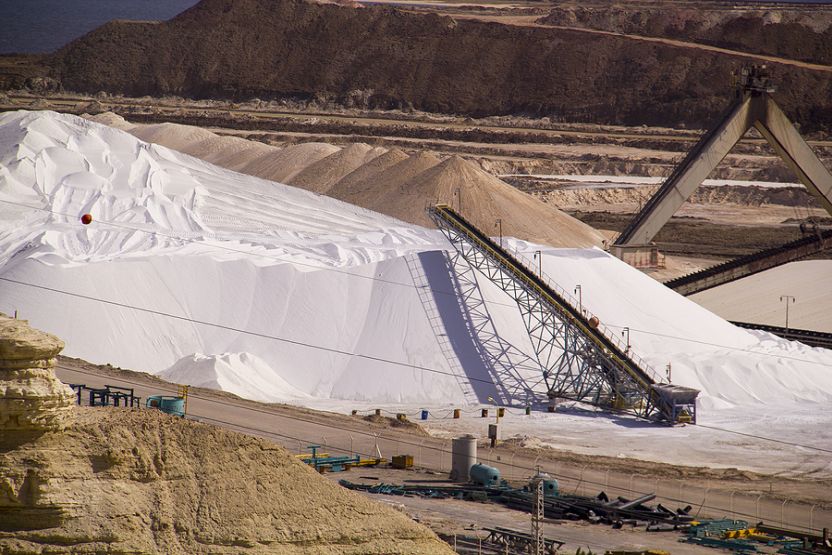
In August 2025, BHP Group ((BHP)) delayed first production from Stage 2 of its giant Jansen potash development in Canada’s Saskatchewan province from FY29 to FY31 and carried out a comprehensive project delivery and cost review.
The results from the review have now been announced and show Stage 2 capex increasing by 40% to US$6.9bn from US$4.9bn, driven by inflationary and real cost escalation pressures, design development and scope changes, lower productivity outcomes and additional labour hours and quantities of materials to complete the project.
In Ord Minnett’s view, the increased capital expenditure, while not unexpected given the inflationary cost environment for any major construction project around the globe, is more than the market was expecting.
BHP expects the extra US$2bn capex to be distributed across FY27-31 and flagged it does not expect the higher spend to impact FY27 capex guidance of US$11bn, but was silent on the post-FY27 profile.
Analysts agree group capex guidance for post-FY27 periods will likely need to be revised upwards given the slew of growth projects in its copper division competing for capital with Jansen. BHP is expected to update guidance at its FY26 result in August.
Given the higher forecast capital intensity for the project, including the first and second stages and potential future expansions, BHP flagged a write-down of circa -US$2.3bn on the aggregate Jansen assets would be taken in the FY26 result.
Diminishing Return
Total project capex is now US$8.4bn for Stage 1 and US$6.9bn for Stage 2. Barclays notes in addition, BHP spent US$4.5bn of pre-FID (final investment decision) capex on shaft construction, US$188m pre-approval spend on Stage 2 and US$320m on the original Athabasca Potash acquisition in 2010.
That gives a total cash deployment of US$20.3bn, of which -US$4.1bn has been impaired, including the new announcement, in addition to the -US$1.8bn post-tax write-down recorded in FY21.
As a result, Barclays notes expected internal rates of return (IRR) have declined. Based on consensus potash prices, BHP estimates an IRR of 11% for Stage 2 versus 7.9-9.1% for Stage 1. That compares to original expectations of 15%-18% for Stage 2 based on an average of prices at the time.
Hence IRR compression on like-for-like pricing basis would be even more material. For the combined stages, Barclays estimates an IRR on total project spend of 7.1% post-tax based on a US$430/t (real) long term potash price.
Once Jansen comes on stream, Citi sees project implementation on budgeted capex as the key bottleneck. The company earlier in August 2025 had taken a two-year extension for the Stage 2 commissioning timeline, which has led to the revision in the capex estimates now.
According to BHP, at the end of May 2026, Jansen Stage 2 is 16% complete with engineering at 83% complete, de-risking the estimate for remaining work.
Jansen Stage 1 remains on track for mid-2027 timeline for first production.
Still worth it?
Despite the blow-out, Citi believes the project’s ongoing operating dynamics remain attractive.
BHP continues to guide for the project costs between US$114-US$130/t once Jansen Stage 2 ramps up, making the mine one of the world’s lowest cost potash operations.
The expected earnings margin for the project continues to be around 65%, while the expected IRR, even with the revised capex, stands at 11%, Citi highlights.
The low-cost position and expected production at 8.5m tonnes with Stage 2 imply the payback period for the project now stands at eight years.
Yet, RBC Capital suggests the updated 11% IRR is a “low bar” and leaves minimal margin for error. RBC struggles to see the strategic logic in proceeding, with BHP likely generating superior returns allocating capital to its copper project pipeline (Escondida/Copper South Australia/Vicuna) or returning cash to shareholders.
RBC had thought it possible that BHP would seek to pause or delay the project, but clearly the costs to do so would outweigh the benefits. At least the bad news can be swept out of the way once new CEO Brandon Craig officially starts on July 1st.
Earlier this month, UBS suggested incoming CEO Brandon Craig will inherit a streamlined portfolio. He is expected to focus on organic growth in copper and potash while maintaining “operational discipline”.
The capex overruns at Jansen Stage 1 and Stage 2 raise questions for Barclays about the returns and technical deliverability of BHP’s organic strategy over the next five years.
This could see management attempting to execute on four major growth projects simultaneously (Jansen, Escondida, Vicuna, Copper SA new smelter) when it has been unable to manage the timeline and budget for one.
BHP may also need to contribute its equity share of capex to its Resolution copper project in Arizona from 2030, while maintaining a net debt, 50% payout ratio dividend.
Add in a combination of declining organic volumes near term, capex guidance upside risk for consensus, low single-digit free cash flow yields prospectively and premium valuation following the recent re-rating, Barclays sees little to tempt in the BHP investment case currently.
However, Citi notes the existing Copper business is likely to deliver above normal cash flow at current spot prices, while cash inflow from the Antamina silver royalty streaming transaction and WA iron ore power infrastructure deal (US$6.3bn in total) should be key drivers for debt reduction in FY27.
Possibly putting a spanner in the works, Morgan Stanley this week noted the US National Oceanic and Atmospheric Administration has confirmed El Nino conditions and raised the probability of a very strong event to 63% for November to January, with some models pointing to one of the strongest on record.
Morgan Stanley’s commodities team highlights risks to supply are highest for copper. Chile (Escondida) could face flood, mudslide, and infrastructure risk.
On Hold
Only two of the six brokers monitored daily by FNArena covering BHP have updated on the Jansen capex increase (Ord Minnett, Citi).
BHP remains Morgan Stanley’s preferred diversified exposure amid low-cost iron ore cash generation and accretive expansion options, which inform Morgan Stanley’s current Overweight rating (equivalent of Buy) and top-end $67.50 target.
All of the other five brokers have Hold or equivalent ratings. Following the Jansen update, Citi retains its $66.00 target, while Ord Minnett has cut its target to a low-end $53.00 from $54.00.
Barclays has an Equal-weight rating and quotes its target as GBp2750.
RBC Capital has a Sector Perform rating and a $57.00 target, with a Sentiment rating of Negative.
The Metals and Mining team at Barrenjoey suggests BHP might need to raise its capex guidance for the years ahead. Currently, just about everyone has penciled in US$10bn per annum, in line with the company’s guidance, for FY28-FY30, but this now no longer seems feasible.
“Perhaps the more important read-through for BHP is the implication for copper project execution capability”, Barrenjoey states.
On its numbers, all copper investments combined currently represent a potential US$33bn-US$40bn of committed capital by BHP over the next decade.
These projects are an important factor in the company’s strategy to achieve long-term copper volume growth.
Barrenjoey has sliced its valuation to $52.96 from $53.29. Rating is Neutral.
Find out why FNArena subscribers like the service so much: “Your Feedback (Thank You)” – Warning this story contains unashamedly positive feedback on the service provided.
FNArena is proud about its track record and past achievements: Ten Years On
Click to view our Glossary of Financial Terms
CHARTS
For more info SHARE ANALYSIS: BHP - BHP GROUP LIMITED
