
Commodities | Mar 19 2026
Strategic importance of rare earths; rising thermal coal and aluminium price forecasts due to Middle East conflict; RBC Capital materially raises forecasts for gold, copper and lithium.
- Canaccord Genuity’s picks across ASX-listed rare earth exposures
- Prices rising for aluminium and thermal coal due to Middle East conflict
- Potential aluminium smelter closures and gas-to coal substitution
- RBC Capital materially raises gold, copper and lithium price forecasts
By Mark Woodruff
Canaccord Genuity’s picks across ASX-listed rare earth exposures
To complement existing downstream neodymium-praseodymium (NdPr) processing at its Malaysian operations, Lynas Rare Earths ((LYC)) last year expanded into heavy rare earths (HREs) processing, in particular dysprosium and terbium (DyTb).
DyTb are experiencing strong market dynamics due to their strategic importance and China’s near monopoly in HRE refining. This has supported significant pricing premiums for ex-China supply, with DyTb oxides currently trading at around four times Chinese prices.
Canaccord Genuity notes the acceleration in development of ex-China supply chains is improving the commercial outlook for Western producers through stronger demand visibility, lower financing risk and enhanced pricing support.
Prior to processing in Malaysia, Lynas extracts ore from its Mt Weld mine in Western Australia, with concentration at Mt Weld and mid-stream processing at Kalgoorlie.
China dominates both the extraction and refining of rare earths, particularly in strategic HREs elements, where it holds a near-global monopoly.
Given rare earths’ importance in energy transition technologies and defence systems, this concentration presents a strategic vulnerability for Western economies.
In response, governments are increasingly prioritising the development of domestic and allied critical minerals supply chains, contributing to a more bifurcated global rare earths market with rising strategic demand and differentiated pricing for ex-China supply.
Rare earths are a group of 17 chemically similar metallic elements.
Permanent magnets represent the largest source of rare earth demand, particularly for NdPr, with applications across electric vehicle motors, wind turbines, robotics and industrial automation, as well as consumer electronics.
NdPr is used in the production of NdFeB (neodymium-iron-boron) permanent magnets, the leading technology in advanced electric motors, while in some applications HREs such as DyTb are added to enhance performance, particularly at higher operating temperatures.
NdPr and DyTb are expected to face supply deficits over the near to medium term, reflecting structurally inelastic rare earth supply, Canaccord explains. New projects are expected to be constrained by high capital intensity, complex permitting and financing requirements, and long development timelines typically spanning 10-15 years.
Against this backdrop, and with demand rising strongly, supply growth is anticipated to lag market requirements.
According to Canaccord, Lynas stands out as the largest producer of separated rare earth oxides outside China and one of the few scaled ex-China producers positioned to benefit from stronger pricing across both light and HRE.
Beyond the ASX100, the broker points to a broader set of opportunities among earlier-stage developers.
These include, Buy-rated Iluka Resources ((ILU)), along with Brazilian Rare Earths ((BRE)) and Meteoric Resources ((MEI)) which are assigned Speculative Buy ratings.
Aluminium and thermal coal
Apart from the Middle East conflict’s impact on oil and gas prices, risks are also lifting near-term aluminium and thermal coal prices.
UBS explains aluminium faces risks from supply disruptions and rising energy input costs, while thermal coal pricing is being supported by higher gas prices (European prices have risen by 86% since the start of the conflict), leading to potential gas-to-coal substitution.
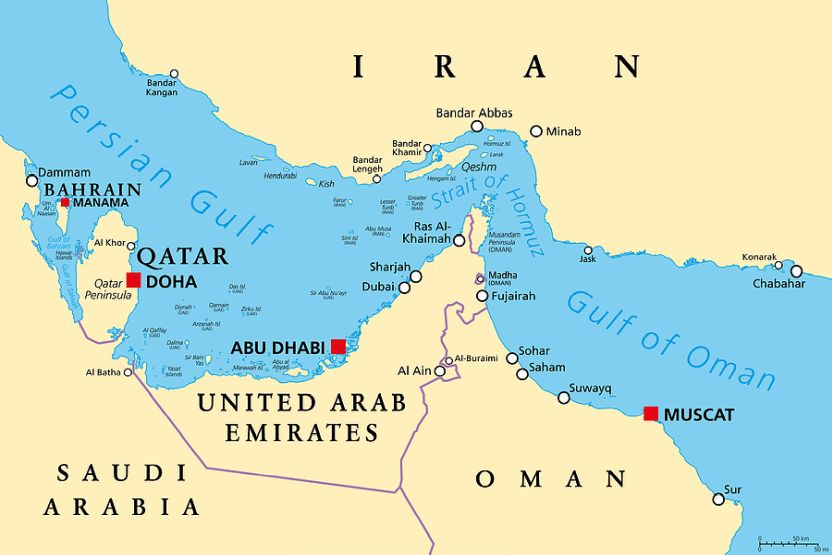
A sustained energy risk premium could continue supporting coal prices, the broker believes, while prolonged restrictions through the Strait of Hormuz may trigger additional aluminium smelter closures.
UBS analysts raise their 2026 aluminium price forecast by 13% to reflect the risk of ongoing disruption, while leaving medium-term forecasts unchanged on the assumption the conflict de-escalates, and energy prices and Middle East supply normalise.
Elsewhere, RBC Capital raises its 2026 aluminium price forecast to US$1.50/lb and lifts its 2027-28 estimates by 7% to US$1.44/lb, expecting growing deficits as China approaches its capacity to increase production. The broker’s long-term price is also raised to US$1.30/lb from $1.20/lb.
The aluminium forward curve has moved into steep backwardation, signalling tightening supply, while LME on-warrant (immediately available for delivery) inventories have fallen to their lowest level since May 2025, explains Morgan Stanley.
At the same time, rising withdrawal orders in Asia suggest to the broker metal is being drawn down to cover regional shortfalls. It’s felt demand risks remain a counterweight if global growth concerns escalate.
Morgans Stanley highlights Aluminium Bahrain (Alba) has begun shutting three potlines representing -19% of output (308kt) after declaring force majeure on shipments two weeks ago.
This adds to the ongoing shutdown of about -40% of the large aluminium smelter joint venture in Qatar, Qatalum (which accounts for circa 260kt), and the separate closure of the 500ktpa Mozal smelter in Mozambique this month, the analysts explain.
If Strait of Hormuz disruption persists, it’s believed alumina and bauxite availability will become a concern, potentially prompting pre-emptive smelter curtailments.
Aluminium had already been Morgan Stanley’s preferred base metal for some time, supported by capped Chinese supply, slower Indonesian capacity ramp-ups due to power constraints, and limited expansion elsewhere.
Morgan Stanley analysts remain positive on aluminium prices, with a FY26 bull case of US$3,700/t.
UBS lifts its 2026 LME aluminium price forecast by 13% to around US$3,250/t, reflecting supply disruption risks from the Middle East conflict accelerating market tightness. Forecasts for 2027 remain broadly unchanged at around US$3,300/t.
Larger price revisions for aluminium over thermal coal drive this broker’s biggest 12-month target price increase. Pure-play exposure Alcoa’s ((AAI)) target rises to $95 from $71, with FY26-28 EPS estimates lifted by 13-82%, although UBS retains a Neutral rating (as the share price already moved).
Buy-rated South32’s ((S32)) target rises modestly to $5.20 from $5.10, with FY26-28 EPS estimates up by 1-14%, as alumina downgrades and Mozal’s closure limit aluminium upside across the portfolio.
UBS also raises its 2026 thermal coal price (NEWC) forecast by 9% to US$126/t while keeping forecasts for 2027/28 unchanged.
Over the medium term, upgraded forecasts still expect thermal coal demand to decline, with prices gradually retreating toward the cost curve at below US$100/t.
Whitehaven Coal's ((WHC)) target price rises to $7.90 from $7.70, with FY26-27 EPS estimates raised by 6%-7%. A Sell rating is retained given thermal coal strength is viewed as temporary and metallurgical coal prices are expected to ease over the next 6-12 months.
UBS downgrades Coronado Global Resources ((CRN)) to Neutral from Buy following recent share price strength, with target price lifted to 40c from 36c. The FY26 EPS forecast is increased by 13% due to higher thermal coal pricing.
While the thermal coal market remains fundamentally well supplied, with high inventories and weak demand indicators, RBC Capital believes two key upside risks remain.
Firstly, there is potential for large production cuts in Indonesia, which would lift prices across grade, particularly lower-quality coal.
Indonesia has flagged possible production cuts to around 600mt in 2026 from 790mt in 2025, prompting some support in benchmark coal prices.
RBC notes similar claims have been made before and producers themselves suggest such cuts are unlikely. Given the impact of the Iran conflict on energy markets, this broker would be surprised if Indonesia ultimately follows through.
The duration of the conflict with Iran is the second upside risk, given its impact on the energy complex, especially European gas prices.
The full story is for FNArena subscribers only. To read the full story plus enjoy a free two-week trial to our service SIGN UP HERE
If you already had your free trial, why not join as a paying subscriber? CLICK HERE