
International | Apr 16 2026

The trend for increasing government intervention throughout South-East Asia should be on Australian investors' radar.
- Southeast Asian governments deploying more aggressive industrial strategies
- Implications for demand, pricing power, and value distribution across industries
- Prudent investors may now incorporate policy dynamics in their assessments
- Growing role of state-linked investment vehicles impacts on how capital is allocated
By Alea Ladaga
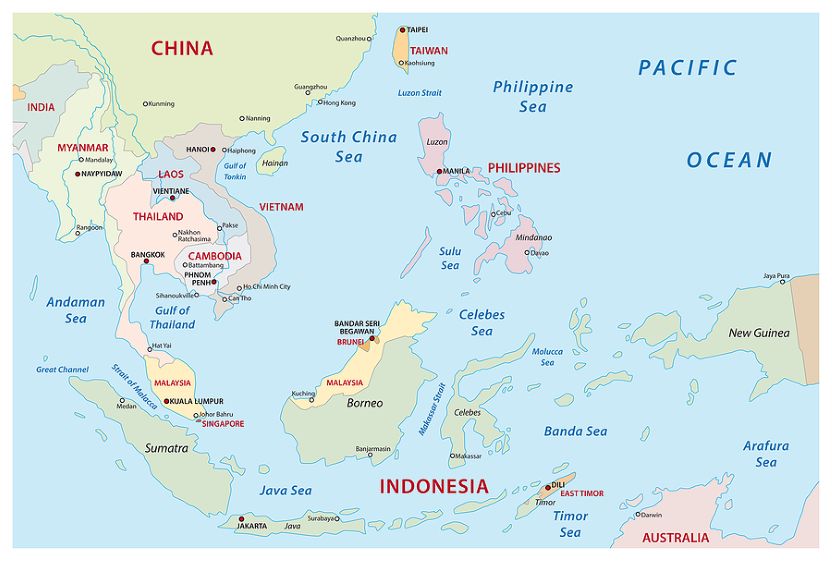
As Southeast Asian governments deploy more aggressive industrial strategies, capital infusion across key sectors is becoming increasingly policy-influenced. While the market dictates existing routines, this article explores the material implications for demand, pricing power, and value distribution across industries linked to the ASX.
Across Southeast Asia, governments play a more active role in directing capital across the region.
By analysing public investment programs and regulatory interventions, Australian investors may need to incorporate policy dynamics alongside traditional market drivers when assessing earnings and risk.
The assumption that markets operate independently of the state is becoming harder to sustain. History suggests otherwise. In the aftermath of the Great Depression, governments reorganised the market, directing capital into infrastructure, industry, and national priorities.
A century later, similar conditions are emerging. Policy makers are actively deploying capital, coordinating trade agreements such as the Regional Comprehensive Economic Partnership (RCEP), and targeting strategic sectors from electric vehicles to digital infrastructure.
During the pandemic alone, it has been estimated governments across the region injected approximately US$177bn into their economies, reinforcing the role of the state as a central allocator of capital.
The effect is twofold. State-led infusion directs money into specific industries to keep demand steady when the broader economy slows. Second, government actions like subsidies, export restrictions, or any bank-related processing can affect supply costs that ultimately dictate how prices are set.
If demand formation in ASEAN is becoming more policy-influenced, how might this affect earnings, pricing, and supply chains linked to the ASX?
ASEAN capital inflows reflect structural reallocation
ASEAN has emerged as one of the largest recipients of global investment flows.
As reported in the ASEAN Investment Report in 2025, foreign direct investment reached a record high at US$229bn annually in recent years, placing it among the top destinations globally and ahead of many emerging markets.
The region is also home to 70% of all listed state-owned enterprises (SOEs) globally. The government functions beyond regulation and, through state-led enterprises, becomes a major market participant for key sectors.
Indonesia, for example, controls its mining and energy industries via the state. Vietnam dominates its energy, banking, telecommunications and infrastructure as SOEs
A significant share of ASX earnings is ultimately derived from Asia-linked demand, particularly across energy, bulk commodities, and infrastructure services.
As ASEAN economies expand through state-backed industrialisation and infrastructure investment, these demand channels become increasingly policy-driven rather than typical capitalist cycles.
Policy as a Capital Allocation Tool
Periods of economic disruption reshape industrial priorities and market outcomes. Elements of this pattern re-emerge across Southeast Asia.
National governments are playing more visible roles in directing investment towards infrastructure, energy, and other strategic industries.
Because of this, the region is projected to become one of the world’s largest economic contenders by 2030, supported by a rapidly expanding middle class and deepening trade integration.
Trade architecture is central to this shift. The implementation of RCEP (“Resource Efficient and Cleaner Production”) —covering roughly 30% of global GDP and trade— has reduced tariff barriers and formalised supply chain linkages across Asia-Pacific economies.
Rather than simply enabling trade, such agreements institutionalise demand flows, reinforcing regional production networks.
Alongside this, governments are actively directing industrial development. Thailand’s electric vehicle strategy, targeting 30% of production by 2030, and broader regional investments in digital infrastructure and energy systems illustrate a shift toward prioritised sectors rather than neutral growth.
Infrastructure remains a critical channel and base of development. Infrastructure needs are estimated by the Asian Development Bank at US$2.8trn from 2016 to 2030 (approximately US$184bn per year).
The ASEAN region is facing a significant investment gap; public and sovereign-backed capital is increasingly filling the shortfall.
This opportunity has supported sustained investment into construction materials and engineering services, with capital deployment often underwritten by state-backed institutions rather than purely private markets.
Energy systems represent a second key area. Across ASEAN, governments are balancing security with transitions into more sustainable energy sources, resulting in continued investment in both conventional and renewable energy infrastructure.
In Vietnam, for example, national power development plans (PDP8) outline capacity expansion and energy mix targets, effectively increasing import demands for inputs such as LNG within policy frameworks.
In early 2025, the Philippines’ Maharlika Investment Corporation (MIC) signed a deal with Synergy Grid and Development Philippines Inc. (SGP) to acquire a 20% stake in the National Grid Corporation of the Philippines (NGCP).
The agreement is expected to increase government control over power transmission and energy infrastructure. Government control over the grid increases the likelihood of coordinated energy expansion, which can support more stable demand for power generation and industrial development.
A third area is the development of strategic value chains, particularly in critical minerals and industrial processing. Indonesia’s downstreaming policies in nickel provide a clear example of how governments can redirect capital toward domestic refining and manufacturing capacity.
By restricting raw exports and incentivising processing, policy has shifted investment into higher value-added segments of the supply chain. This does not necessarily reduce demand for raw materials, but it may alter where margins are available and how pricing power is distributed across producers.
Manufacturing and export capacity further illustrate how capital inflows are being translated into demand.
Economies such as Vietnam have attracted sustained foreign direct investment into industrial production, supported by policy frameworks that prioritise export competitiveness and infrastructure development.
This combination of external capital and domestic policy coordination has reinforced demand for energy and intermediate inputs, linking regional industrial expansion to upstream commodity suppliers.
Finally, the growing role of state-linked investment vehicles adds another layer to how capital is allocated.
As highlighted by the East Asia Forum, state-owned investment funds in Southeast Asia are increasingly acting as long-term capital providers, co-investing alongside private capital and helping to de-risk large-scale projects.
This suggests capital allocation itself is becoming more institutionalised, with governments influencing both the scale of investment and its long term direction.
Taken together, these dynamics suggest ASEAN’s growth is increasingly policy-coordinated by sovereign funds. It also helps that Singapore’s more developed and state investment arms, Temasek Holdings and GIC, are considered as some of the world’s most influential capital vehicles.
Temasek and GIC often invest in major sectors of infrastructure, energy, logistics, and technology and act as anchor investors in large projects.
Singapore has also initiated its Singapore Green Plan 2030, being heavily involved in regional energy financing, power infrastructure investments and transition projects to renewable energy.
Trade infrastructure funded or coordinated through Singapore reinforces regional supply chain integration, supporting demand flows tied to Australian exports.
Why all this matters for the ASX
Commodity markets have traditionally followed a linear pattern. Rising demand drives prices, which in turn incentivises supply.
Across parts of Southeast Asia, government-led infrastructure programs, industrial policy and capital deployment are shaping the scale and direction of demand.
This can be seen through three transmission channels:
- first, volume expansion, where infrastructure and industrialisation support sustained demand for LNG, iron ore and agricultural inputs;
- second, pricing dynamics, where policies such as Indonesia’s downstream processing shift value capture closer to source, with potential implications for upstream margins;
- and third, capital expenditure multipliers, where public investment creates longer-dated pipelines for engineering, construction and logistics services.
This shift also introduces a different risk profile. While policy-led investment may provide greater visibility in some sectors —particularly infrastructure and energy— it also embeds new uncertainties.
Export restrictions, regulatory changes, and industrial mandates can alter supply-demand curves. Risks on execution around large-scale projects and varying policy approaches across ASEAN add further complexity.
If historical periods of coordinated capital offer any guide, the key question is not whether demand increases, but how and where that demand is exposed.
As the government powers up new economies, it is now up to the markets to fully adjust to that shift.
As a result, policy may begin to function as a more prominent variable in pricing and earnings outcomes.
For ASX investors, the implication is not that market fundamentals no longer matter, but that understanding how governments direct capital —across infrastructure, energy and strategic industries— may become increasingly important in assessing both opportunity and risk.
Find out why FNArena subscribers like the service so much: “Your Feedback (Thank You)” – Warning this story contains unashamedly positive feedback on the service provided.
FNArena is proud about its track record and past achievements: Ten Years On