
Small Caps | Apr 20 2026

This story features KELSIAN GROUP LIMITED.
For more info SHARE ANALYSIS: KLS
The company is included in ASX300 and ALL-ORDS
Transport company Kelsian Group has suffered significant de-rating in past years but the issues that have bedevilled to company have now been addressed.
- Kelsian Group's first half earnings beat market forecasts
- The costly Marine & Tourism division has been sold, subject to approval
- New global transport contracts offer opportunity
- Analysts believe the market is not paying attention
By Greg Peel
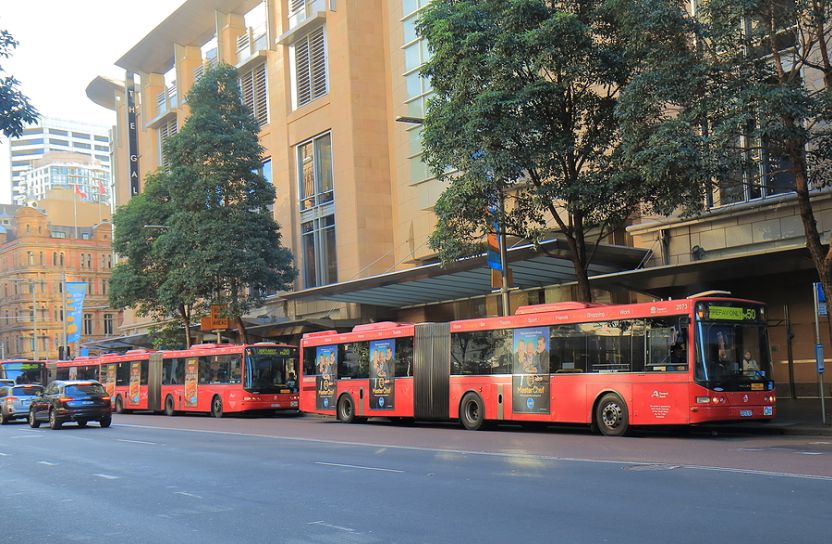
Headquartered in Adelaide, Kelsian Group ((KLS)) is a transport conglomerate operating buses in Australia and across the globe and sea-going ferries and resorts in Australia.
Kelsian provides contacted government bus services on specific routes in all Australian states bar Tasmania along with the Northern Territory, making it Australia’s largest bus operator.
Bus services are also contracted in London, Liverpool and other UK sites, the Channel Islands and in Singapore.
Through All Aboard America Holdings Inc (AAAHI), Kelsian operates motorcoaches across seven southwestern US states servicing the corporate, government, education, resources and tourism sectors.
Through its Marine & Tourism division, Kelsian also operates Sealink ferry services to K’gari (Fraser Island), Kangaroo Island, Rottnest and other islands, provides cruises on Sydney Harbour, the Swan River and elsewhere, operates accommodation on K’gari and Kangaroo Island, and offers tours on islands and elsewhere including South Australian wine regions.
Kelsian has nevertheless now sold its Marine & Tourism division, other than some select ferry services, to fellow South Australian-based Journey Beyond, which, among other services, operates the Ghan railway.
The sale remains subject to ACCC approval and, because Journey Beyond is owned by international tourism operator Hornblower Group, FIRB approval.
On the other hand, Kelsian has recently secured contracts for workforce transportation services for several LNG projects, including in Louisiana and Gladstone, Queensland. The contracts form part of the company’s expansion into the global energy infrastructure sector.
Kelsian’s share price has undertaken quite a tour of its own in recent years, trading under $3.00 when Australia went into covid lockdown in 2020 before racing to $10.00 one year later. Then the wheels fell off, and Kelsian is now back trading around $4.00.
In the last two years, Kelsian’s PE multiple has significantly de-rated on elevated capex, high gearing and the absence of new bus or other contract wins.
Analysts now declare Kelsian to be a different company, a fact the market has as yet failed to recognise.
Enjoy the Ride
Following its first half result release in February, UBS declared Kelsian was now “back on track”. The company was seen delivering a clean result with clear beats relative to consensus across earnings and profit.
A positive share price reaction on the day was further supported by a low single-digit FY26 upgrade to earnings driven by outperformance across the US industrial business, UBS noted, and the much-awaited announcement of the divestment of the Marine & Tourism segment.
“Hop on and enjoy the ride” said Macquarie at the time.
Kelsian’s international division saw strong first half revenue growth of 21% year on year, with 310 basis points of margin expansion, as industrial contracts grew from strong Southern US gas ramp-ups, Macquarie noted.
The Marine & Tourism division saw 8.6% revenue growth and 120bps of margin expansion, ahead of being slated for sale.
The Australian Business suffered cost pressures driven by greater servicing requirements from government delays, leading to margin compression of -290bps over the half. Whether these can be recouped is unclear, but Macquarie’s forecasts assume earnings margins remain flat at 10.9%.
The outlook is assisted into the second half by the ongoing Bankstown Rail Replacement, which Macquarie estimates is worth $12m of earnings per half. Kelsian provides the replacement bus services as the Bankstown line is switched to metro from heavy rail.
While that contract will come to an end, a re-pricing of Kelsian’s Sydney Region 6 bus contract will offset roll-off effects of Bankstown Rail Replacement from July onwards.
Macquarie notes further delays to the end of 2026 would suggest upside.
A delay on a metro project?
Selling Sealink
Sealink is actually how the Kelsian Group began, before its foray into buses. The sale of Marine & Tourism, if approved, is expected to be completed in the first half of FY27.
While the proceeds of the sale will initially be applied to lowering debt, UBS also expects further investment towards the US AAAHI business, which grew sales by 27% over the first half, outperforming expectations.
UBS notes post transaction investors should see:
- a) a notable upshift in Marine margins (ie remaining Sealink services),
- b) a more stable, less cyclical, well contracted remaining group business; and
- c) a -$9-11m reduction in maintenance capex.
Looking forward, UBS remained positive given a solid growth runway in the international business, and management’s expectation of a modest recovery in Australian business margins, gradually back towards 11.5% into FY27.
Result commentary was optimistic around potential new contract wins in Auckland and Singapore over the medium term.
To Canaccord Genuity, Kelsian’s US market venture has proven its class, providing strong organic growth and sustainable margins and earnings.
Earnings have risen nearly 60% over three years, with a margin baseline close to 25%.
Group balance sheet deleveraging has also been playing through organically ahead of the announced Marine & Tourism asset sale.
Both should confer appreciation, Canaccord suggests. The latter provides flexibility for future organic and inorganic growth (likely in the US) given that, like UBS, Canaccord does not see the proceeds being purely used for debt relief (noting it would be dilutive if so).
Data points around improved Australian Business performance (Sydney Region 6 and fleet electrification) are a focus for Canaccord through the second half.
Kelsian is selling Tourism for $161m (subject to approval). While the sale is -5% earnings per share dilutive, it makes sense to Jarden given it lowers net debt to earnings, raises the mix of contracted Marine revenue to 30%-plus with remaining portfolio assets where Kelsian is mostly the exclusive or sole operator; and the 7x earnings sale price offers a strong look-through for the rest of the group which currently trades on 6x earnings (as of last week).
Jarden joins the chorus in expecting Kelsian to eventually re-deploy funds into US M&A, with potential for up to 6% earnings per share accretion.
Don’t Mention the War
As one might imagine, Kelsian Group has rather a large fuel bill. Since the war began, fuel prices are up some 64%.
In theory, says Jarden, Kelsian has around -$43m per annum of uncontracted fuel cost exposure. With fuel prices up 64%, this is a -$27mpa headwind. But in reality, Jarden does not believe it’s significant.
Jarden notes AAAHI exposure is mainly on a charter basis, with dynamic repricing allowing cost pass-through. Some 50% of exposure in Marine & Tourism is hedged until June, and Kelsian will eventually add fuel surcharges.
There are many operators currently adding 3-20% fuel surcharges and the -$8m headwind for Marine & Tourism will disappear once sold.
Another impact is volumes; considering the size of Marine & Tourism (18% of earnings post sale), a potential shift away from international travel would be a headwind, but Jarden believes this is manageable.
The International Energy Agency has recommended various ways to reduce fuel demand including work-from-home (bad for buses) and use of public transport (good for buses).
While the US is oil and fuel refining self-sufficient, that is not the case in Australia.
One presumes, therefore, if this goes on much longer the question of diesel availability must be considered.
Contract Opportunities
Fuel notwithstanding, Jarden notes on top of strong earnings visibility for Kelsian’s base business, new contract opportunities are building.
Kelsian has no major Australian or Singapore contracts expiring until the end of FY28, Jarden notes, and the company has a strong retention record.
When piecing together contract opportunities in Australia, Singapore and Liverpool UK, Jarden sees new contracts up for tender worth in excess of $680m per annum of revenue, or more than 27% of existing group revenue, in the next 24 months, with Kelsian in a solid position.
Jarden also thinks Kelsian is in a strong position for more LNG contract wins and/or extensions.
Undervalued
Kelsian’s share price spiked post the first half result release but has since fallen back to be little changed since UBS noted the stock was trading at a -32% PE discount to its historical average.
UBS retained a Buy rating with a $5.60 target.
Macquarie adjusted its earnings forecasts upward for the base business, netted out by loss of Marine & Tourism earnings, but is on research restriction so could not provide a rating or target.
Canaccord Genuity at the time didn’t see recent progress as being priced into Kelsian’s valuation and suggested a re-rating is likely as 2026 plays through. Canaccord retained a Buy rating with a $6.00 target.
Last week Jarden initiated coverage of Kelsian Group with an Overweight rating and $4.70 share price. While $4.70 appears low compared to other target prices, we note the share price hit $4.70 post February result but has since fallen back to $4.00.
Find out why FNArena subscribers like the service so much: “Your Feedback (Thank You)” – Warning this story contains unashamedly positive feedback on the service provided.
FNArena is proud about its track record and past achievements: Ten Years On
Click to view our Glossary of Financial Terms
CHARTS
For more info SHARE ANALYSIS: KLS - KELSIAN GROUP LIMITED
