
International | Apr 23 2026

Investing legend George Noble recently chatted with FNArena’s Danielle Ecuyer to breakdown how equity markets have changed, how investors can navigate the noise and volatility, and the investment themes (and stocks) he likes.
By Danielle Ecuyer
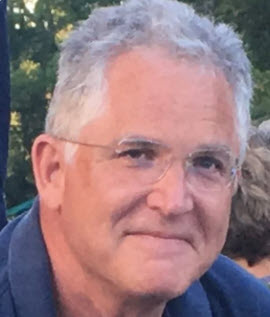
George Noble, former Hedge Fund manager and leading Fidelity investment manager, is now a prolific online contributor across multiple social media platforms, in his pursuit of assisting retail investors to navigate markets and bring forward real investment ideas.
Noble’s experience and longevity in US and global markets bring a wealth of knowledge, along with access to guests whose work is usually only available to institutional clients.
Noble is at the forefront of democratising investment. The discussion focused on how markets have changed, what to look out for, how to cut out the noise, and what he sees as future money making ideas for investors.
Below is a curated transcript of the interview which is available at:
and/or:
https://youtu.be/mCEX6-TmW18?si=TyIy519Ay0pS1Mt_
The interview was conducted on April 21, 2026 in Sydney and released a day later.
Danielle Ecuyer: George can you outline your career and what you are doing now?
George Noble: I started my career at a little company called Fidelity and Management Research, which became Fidelity Research, now with US$18trn under management.
Back in the day, they had US$8bn under management, only US$3bn in equities. I was a summer student in 1980 and Fidelity had a tradition of only hiring two summer interns, one from Harvard, one from Wharton.
If each summer intern was offered a permanent job and came back, they didn’t hire anybody else, they only had two people a year.
Fidelity came through a period in the 1970s where, believe it or not, they had layoffs. Their exciting new product that sustained the company was the money market fund. They were the first ones to have a money market fund.
I went to work in the summer of 1980, permanently in 1981. The Dow was at 800 and as Ned Johnson used to say, “never confuse brains with the bull market”.
I worked hard but you also have to be in the right place at the right time. I was the auto analyst who accompanied Peter Lynch to Detroit and visited Lee Iacocca.
After that, we started the affiliate Overseas Fund. Believe it or not, in 1984 they didn’t even have foreign stock fund and ours, the overseas fund, was the first foreign stock fund.
This was both a blessing and a curse.
In the first year I managed money, in 1985, the fund was up 79%, the number one fund in the country. The fund grew from zero to US$3bn. At that point in time, US$3bn was a lot of money and to put it in context, Peter Lynch managed US$5bn at the time (1986). I was there for 10 years.
Post Fidelity, I went on start a couple of hedge funds in the in the 1990s, and the OOS closed my last fund in 2009. Happy to talk about that.
Had a little foray with an ETF in 2022 which ended disastrously.
One always learns more when you screw up than when things are going well.
And so, what am I doing now? I’m a presence in social media and investor education is my thing.
Opposed to a lot of the nonsense and bloviation you find on X and elsewhere, I bring the receipts, real content to people.
You and I have a good mutual friend, Michael Howell, who I’ve known since the 1980s as an example, that’s the type of calibre of content that I bring.
We’re having a conference in May. Conference in June. We’re going to have at least 2000 attendees. We really are democratising finance, but in the right way.
I’m trying to teach people what I learned. I was fortunate to learn from the greats. I’m trying to pass that on to folks.
Interviewer: How have equity markets changed over the years?
Noble: Let’s first start with just the character of the markets. Who’s doing the buying and who’s doing the selling?
Back in the 1980s and the 1990s, it was real money; mutual funds, pension funds, then we saw the ascendancy of hedge funds.
That was really what I would call very fundamentally based investing. It was called the “hunter gatherer” model of investing, such as ‘I know something you don’t know. Namely, I talked to the company and I found out something, and some might say that, you know, the likes of Fidelity made a business of arbitrage of non-public information’.
You could talk to companies; they would tell you things. But then, with the rise of new regulations, companies were restricted in terms of what they could say, so the lawyers and investment bankers kept them in line, and your edge was greatly diminished.
Coincide this with the rise of the Internet, so the half-life of the utility of any piece of information you might have, became diminished.
Active investors have been on their back foot losing assets to passive and there are good reasons for that. Passive investing is much less expensive in terms of fees.
We’ve also been in a market which is very unusual. There used to be the law of large numbers: as the company gets bigger and the market gets bigger, you’d want to shy away from those things, because the marginal return on capital of the biggest guy would be far less than the marginal return on capital of a well-run small company.
But what’s happened, these large cap companies, like US Big Tech, have network effects. If you can’t scale in this world, you’re dead.
It’s kind of the opposite of what I grew up with in the early 1980s, from a fundamental perspective. You didn’t ask this question, but I’ll answer it anyway.
You know the way markets are set up right now, and Peter Lynch is the GOAT (greatest of all time), in my opinion, current markets are not set up in a way to breed future Peter Lynch’s market structure; the value of deep dive analysis.
It’s not what it used to be.
Nowadays, people want to know what’s the story, and they want to look at the chart. I think we’re inexorably, inevitably, making our way back to fundamental investing.
In a world where you make the cost of capital free, “pigs will fly”. The junkier the company, the higher the beta, the more ample liquidity.
The character of the market has changed enormously from a fundamental perspective.
My friend Stavros talks about the three V’s: the volume of information you get, the velocity, and thirdly the Variety.
Jay Pulaski, formerly an Emerging Market Strategist for Morgan Stanley, who now has his own boutique advisory, captures the essence brilliantly, and this is not a political statement.
He says, ‘my superpower is to ignore everything that Donald Trump says’. That has nothing to do with whether he likes Trump or hates Trump, it is because Trump is a volatility generating machine.
Okay, so it’s like a random number generator. So keep your eye on the prize, and as Peter Lynch famously said “know what you own”.
One last point, it started around 2000 and the Dotcom bust. I don’t know between Alan Greenspan or Ben Bernanke who’s done more to destroy America by turning on the fire hose and printing so much liquidity, and just pushing asset prices up in a world where one perhaps has fiscal limitations.
All they know is ease and the extent to which really kind of makes the fundamental side of things less important.
Within the last year we’ve started the road back to more fundamental analysis. I think the AI trade represents the biggest mis-allocation of capital in the history of the world.
You should avoid tech.
Denis Gartman used to have a saying: ‘we want to own things, which if you drop them on your foot, it will hurt. Okay, you know, little microchips, not so much.’
Interviewer: Can financial markets handle higher interest rates and how high are we talking?
Noble: Charlie Munger, Warren Buffett’s longtime partner who passed away recently, had great sayings and one of them was, ‘you show me the incentive. I’ll show you the outcome.’
They (US central bank) need to be able to issue more debt. My concern is we’re heading towards a sort of Liz Truss moment, where the bond market is going to say: no!
They already stopped quantitative tightening a few months ago, and now they’re funding everything at the short end of the curve. Irresponsibly, in my view.
This is not sustainable, and I think particularly set against the backdrop of a lot of other things you pointed out, including increasing geopolitical upset.
The USD is not going to go away but I think all paper money is being devalued against real things.
They can’t let the rates go up. They’re going to engage in yield curve control and to keep spending until the adult in the room says no more.
The adult in the room happens to be Mr. Bond, Mr. 10-year bond, not James Bond.
We may get one of these situations where, you know, the US 10-year is at 4.30% but what if I told you by the end of the year it’s 5.10%?
I’m not saying Weimar republic type numbers, that scenario is like hyperbolic, but I think there’s a theme here.
Russell Clark, an Aussie refugee and very successful hedge fund manager, his theme has been rising cost of capital globally, and I think that’s what we’re looking at.
We’re (governments) are just spending money, and more, and more, meaning it’s almost enough to make you think that MMT (Modern Monetary Theory) was legit.
Gold is one of the few assets out there that is not somebody else’s liability. It’s not that the price of gold is going up, although it is going up, but it’s the value of money is going down.
So, go back to your question about, you know, what are they (US central bank) going to do?
They can’t let the nominal interest rates go up very much. They’ll engage in yield curve control, and it reminds me of what Alan Greenspan said in the late 1990s in front of a congressional hearing.
They asked him, ‘is the US going to run out of money? How can you guarantee you’re going to be able to make social security payments and all the rest? ‘
In classic Greenspan fashion, he said, ‘Well, I can guarantee you we’re not going to run out of money. That I can promise you, however, I cannot assure you as to what the value of that money will be.’
That is kind of where we are, in my view.
Interviewer: How concerned should investors be about a sell-off in the US Treasury market?
Noble: The question I ask people is “what are markets concerned about now that they really shouldn’t be concerned about, and what are markets not concerned about now, that they should be concerned about?”
In other words, in three-six months from now, how is it going to be different?
Russell Grant’s concern is the biggest scare for the gold trade right now. If we do get a sell off in bond markets, and we do get interest rates starting to really go up a lot, that could pressure the gold price.
I really like the idea of not just being long gold, I particularly like the gold miners, that’s my favorite trade, far and away.
If you said Well, George, what could go wrong with that? What could possibly go wrong?
When Kevin Warsh comes in, I think they (the Fed) cut rates, and bond yields are going up, not down, because people are going to say that’s irresponsible policy.
I think the US 10-year is grossly mis-priced, so just to start the conversation, it should have a five handle on it.
Overall, If we start getting generalised inflation, that’s higher bond yields, the money class of 10% of the population (US) that owns all the assets, they’re not going to like that.
Every time they (the Fed) start to let yields go up, it’s like the asset prices crash. They have to stop. We’re kind of stuck in this weird situation.
I would run, not walk away from bonds. I’d say the same for US tech stocks. I own miners.
It’s a very different world. The next ten years, in my opinion, are not going to look anything like the last 10 years, but of more relevance, right now, in 2026, the markets already show you.
I don’t focus on the day to day, the week to week. When I think about markets, I’m looking at the other way people and how markets have changed.
Do you think Peter Lynch, or anybody at Fidelity, would sit around and try to predict the market on a weekly basis and measure their performance weekly? Are you out of your freaking mind?
But this is what retail investors do now, and so I promise you they’re going to get an education.
The only question in my mind is whether, as my father always would tell me, you can get an education by reading about it in a book, or you can get an education from Mr. Market.
I promise you, the first one’s a lot cheaper. But we’re all human, and inevitably, we all like getting our education from the latter, not the former.
Interviewer: What energy exposure do you like?
Noble: My interest has been in the offshore companies, service companies, the drillers. Because whether we go to the world of under-US$40/bbl or US$70/bbl having access to oil and energy in a geopolitically challenged world is important.
I think we’re going to see increased exploration activity. As you know, energy sees -5% depletion a year, give or take. We keep drilling for more, so you want to invest in areas that have seen under-investment and avoid areas that have seen excessive investment.
To answer your question, specifically, companies like Schlumberger –keep it simple, stupid, okay?– like there is going to have to be more drilling, more activity. Schlumberger has outperformed Microsoft, I think, by over 100% in the prior five months.
It’s already happening. It’s not like I’m making stuff up that might happen. The market’s already starting to see this. And so, to come back to your question, the big boys would do so well, like BP, Shell, Exxon, Chevron.
But with what’s going on with the oil price right now, I don’t know if I’ve never seen a situation so screwed up. This is arguably far worse than any supply shock the world’s ever seen.
I could see oil spiking to God-knows-what-numbers in the next few months. Equally, though, with the US midterms coming up, we’re sure there’s a lot of deals being done behind closed doors to keep the price suppressed.
I believe the price of oil is too low, but that is small beer in comparison to the bigger scheme of things. The one thing I’m pretty certain of is we have to do a lot more drilling.
So, Schlumberger, Tidewater, Valero, Valaris, all these companies will do incredibly well, as well as gold miners like SSR Mining (gold producer).
The major oil stocks, as mentioned, they should do well. Let’s keep in mind, those stocks trade as proxies for the price of crude.
The good thing about today is a lot of the stocks have gotten shellacked already, because, supposedly, we have peace.
I just think drilling activity is going to be sustainably, much higher.
I think the gold price is going to be much higher.
As a professional investor, what I’m trying to do is to focus on the dispersion and the rotation in the market, trying to call the market is a fool’s errand.
Just go back the last few years. Up until last year, Washington was doing one thing, but if you own hyperscalers and AI plays, you’re up a gazillion percent.
Forget about what the markets are doing right now. It’s the opposite.
A lot of these tech stocks, they’ve arrived, but they’re still down.
Year to date, a lot of these mining stocks and energy stocks are up 20%, 30%, 40%, 50% so the first shall be last and the last shall be first.
One last stock investing story
Noble: The first stock I ever recommended at Fidelity to Peter Lynch was a retail stock. Peter buys 10k shares and a month or two goes by and the stock falls by -15%.
There was inclement weather and sales were terrible as a result, so I think, my God, I’m finished, my career is over before it ended. My first stocks was a disaster.
People ask, what was it like working for Peter? The reason I say Peter is the greatest of all time is that different investors each have their own method. Peter was probably the best analyst I’ve ever met. He could take any company and analyse it.
So I go in into Peter’s office and explain the stock is down -15% and he goes: it rained and there’s nothing wrong the company, it’s just that sales were bad for last month.
He says that’s great, It’s fantastic. What are you talking about? Well, we get to buy more at a lower price. We’re gonna take advantage of the stupidity of Mr. Market.
Another problem many investors make, in my opinion, is they rely on the share price.
If the price is the ultimate arbiter, it’s not the what, it’s the why. Why did the GDX go down -40% or why did the silver price collapse?
Well, the fundamentals change. Or is it?
Maybe some countries are stuck for liquidity. They have to sell what’s most liquid so they blow it out right?
So I urge everyone to focus less on the what. Numbers go up. Chart looks good.
Focus more on the why. Because if you understand the why, that will inform how you should view the what.
For instance, SSR Mining, I really like the company and wrote it up my substack. The stock went from, I don’t know, mid US$30s, down to US$25 and the stock trades as a surrogate for the gold price.
At US$25, it’s like five times earnings, so unless you think the gold price is likely heading a lot lower, you should be happy it went down, not upset about the price volatility.
So again, know what you own, and it’s not about being in a discord room, and the chart looks good, and so on.
So know what you own with good old fundamental analysis, and that’s where I think we’re headed.
Where investors can find George Nobel’s work
Youtube: http://www.youtube.com/@nobull-markettalkwithgeorg4907
Virtual Investment Conference: noble-capevents.com
Substack: georgenoble.substack.com
LinkedIn: linkedin.com/in/george-noble-223882104
Find out why FNArena subscribers like the service so much: “Your Feedback (Thank You)” – Warning this story contains unashamedly positive feedback on the service provided.
FNArena is proud about its track record and past achievements: Ten Years On