
Australia | Jun 15 2026

This story features SGH LIMITED, and other companies.
For more info SHARE ANALYSIS: SGH
The company is included in ASX100, ASX200, ASX300 and ALL-ORDS
SGH has a proven track record of driving growth through both operational improvement and M&A, supported by exposure to long-duration infrastructure, resources and demographic trends.
- Australia's structural capex super-cycle offers positive tailwinds
- Crux LNG project's earnings outlook not yet reflected in consensus forecasts
- Management targets 10% through-cycle earnings growth using AI
- Analysts agree current share price is undervaluing the group's potential
By Danielle Ecuyer
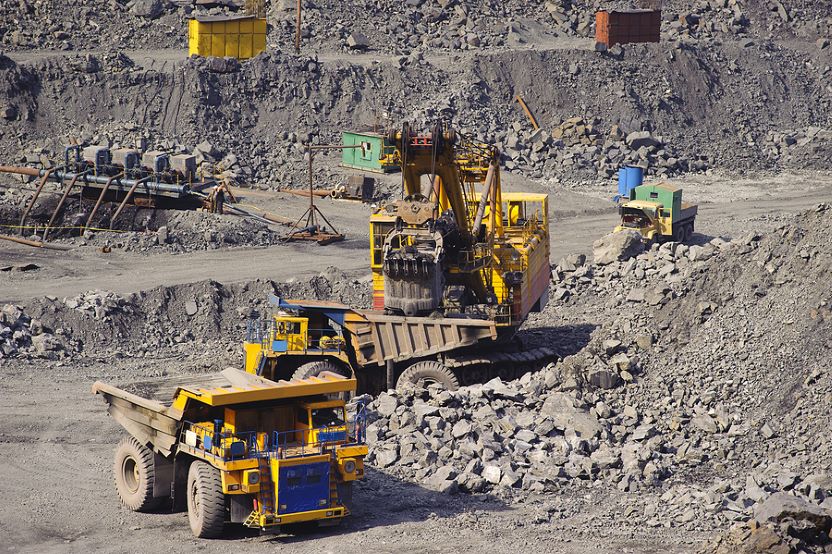
SGH’s conglomerate style lends itself to major growth cycles
“The problem with hindsight is, it always arrives late”.
If the world were changing, would you change the way you invest?
The macro strategists at Morgan Stanley would answer in the affirmative.
Assessing the Budget, Morgan Stanley commented it is “the most significant fiscal event in 20 years”. Combine that with inflationary impacts from the Middle East war, and the outlook for both Australian equities and the economy has shifted.
Morgan Stanley used its initiation of coverage on SGH Ltd ((SGH)) in March to highlight this company is positioned as a major beneficiary of Australia’s “unfolding capex cycle”.
If anything, the Budget and the pre-to-post war outlook, including the RBA’s rate hiking cycle, have only strengthened the case for exposure to the robust fiscal impulse around AI, data centre spending, infrastructure, and the resources sector.
For Morgan Stanley, consumption is out and exposure to capex spending is the key strategic thematic.
RBC Capital has joined the chorus on what is viewed as an Australian industrial conglomerate with exposure to infrastructure, building, resources, energy, and media.
For those old enough to recall, SGH might be considered a ‘Back to the Future’ flashback to when conglomerate corporate structures were the preferred model, offering diversity across asset classes.
The group’s interests span WesTrac (100%), the sole authorised Caterpillar dealer in WA, NSW and the ACT, with around a 60% market share in large mining equipment.
Coates (100%), the largest provider of equipment solutions in Australia, is generating high margins with national exposure.
Boral (100%), Australia’s largest construction materials supplier, operates with a leading position across concrete and asphalt.
The portfolio further includes Beach Energy ((BPT)) (30% stake) and Crux, as well as media interests such as a circa 20% equity holding in Southern Cross Media ((SXL)).
Crux potential not yet reflected
One reason for RBC Capital to recently initiating coverage with an Outperform rating is an apparent underappreciated earnings catalyst in Crux.
The Crux LNG backfill project, in which SGH holds a 15.5% stake alongside Shell, is considered a major future earnings driver that is not yet reflected in market forecasts.
RBC expects production to begin in the second half of calendar 2028 and reach full output by FY30, although the latter could occur sooner.
At peak production, Crux is forecast to contribute around $350m-$370m in annual earnings (EBITDA). Current consensus forecasts do not appear to include this contribution.
SGH is expected to invest a further -$285m in its share of the project between 2H26 and 1H28, which will weigh on free cash flow in the near term. However, once production starts and development spending falls away, Crux is expected to become a substantial source of cash generation and earnings growth for the group.
RBC believes upcoming developments at Crux could act as a positive catalyst for SGH shares, given the market may be underestimating the project’s long-term value and earnings contribution.
Bell Potter also pointed out growing supply challenges in local gas and LNG markets over the medium term, which are expected to benefit both Beach Energy ((BPT)) and Crux.
A keen strategic eye on growth
Management has emphasised the group aims to generate earnings (EBIT) growth of 10%, through the cycle, via both organic and inorganic growth.
The ambition is to grow the market value of SGH to $30bn over time. Currently, the market capitalisation stands at $17bn.
Based upon the 10% three-year rolling average earnings (EBIT) and EPS growth targets, the targeted value could be achieved in around six years, assuming that growth is sustained.
SGH is an ideal candidate for analysis from a top-down (macro) approach, as explained by the analyst at Morgan Stanley.
This broker believes Australia is in the beginning phase of a “structural capex super-cycle” underpinned by six “long-duration” themes. Notably housing, defence, energy transition, mining, data centres, and the Brisbane Olympics.
An acceleration in the cycle is flagged into the late 2020s, underpinned by ongoing government policy across infrastructure, energy, and defence.
SGH’s earnings drivers, WesTrac, Coates and Boral, are highly exposed to Morgan Stanley’s six structural capex themes. The value across these segments is forecast to grow at a 7.7% compound annual growth rate out to $326bn by FY30, from $225bn.
The conglomerate’s positive structural exposure to growth segments of the Australian economy is reinforced by its competitive position in the relevant markets.
Investor Day reconfirmed FY26 guidance
At the company’s recent Investor Day, management reiterated FY26 earnings (EBIT) guidance growth of between low single digit and mid-single digit growth.
Strategically, one of management’s core “tenets” is to strive for ongoing improvements across all businesses.
Squeezing out incremental gains is key to delivering performance. As noted by Macquarie, this equates to earnings (EBIT) margins above 15% for Boral, Coates achieving gains in time utilisation from the existing 62%, and WesTrac securing better aftermarket service productivity.
AI was highlighted as a facilitator and pathway to improved efficiencies. On Bell Potter’s assessment, management delivered a “comprehensive” Investor Day presentation, including a target of $100m in quantifiable benefits generated by using AI technology across FY26-FY27.
RBC’s forecast is for Boral to expand earnings (EBIT) margins to 15.4% in FY28 from 13% in FY25.
Management also reiterated the five-year $1.7trn infrastructure and construction pipeline.
Like Morgan Stanley and Macquarie, Bell Potter points to a “sustained up-cycle” across investment in these segments through to FY30.
All are positive tailwinds for Boral, WesTrac, and Coates.
RBC concurs with Morgan Stanley’s view that concerns around an East Coast infrastructure slowdown are overdone.
Applying State Government Budgets, in the five years to 2025, $276bn was invested in infrastructure across VIC, NSW and QLD, with $307bn budgeted between FY26 and FY29.
While acknowledging Victoria remains weak, RBC believes the infrastructure sector is merely experiencing an “air pocket”. Morgan Stanley does see some near-term risks to renovation demand, to which Boral has exposure.
Iron ore and gold production are forecast by Bell Potter to rise by 3% to 12% p.a. over FY26-FY27, which should support investment in mining fleet expansions, renewals and aftermarket services for WesTrac.
CEO Ryan Stokes’ commentary at the Investor Day referred to a “willingness” to look at overseas opportunities, RBC observes.
Opportunities have historically been focused on industrial and energy assets with “privileged” and difficult-to-replicate assets, as well as sizeable scale of around $200m in earnings (EBIT).
History suggests a winning strategy
Management has achieved a proven track record of successful M&A activity. The Coates and Boral acquisitions were purchased at attractive valuations and have achieved strong returns, as detailed by Morgan Stanley.
Potential involvement in BlueScope Steel’s ((BSL)) non-North American assets, an issue that has weighed on sentiment towards SGH, is viewed by some analysts as another example of management’s willingness to pursue value-accretive acquisitions.
Management’s interest in BlueScope’s non-North American assets could represent a further value-generation opportunity for SGH. The Morgan Stanley analyst estimates around 20% EPS accretion alongside potential synergy optimisation.
Other points of interest identified by RBC regarding the more recently acquired Boral include the strategy around securing prized assets.
Boral has 72 quarries around Australia, with no new quarry established in metropolitan Melbourne for more than 40 years. Its integrated cement plant is a circa $1bn asset. Boral’s surplus assets were valued by Grant Thornton at between $1.4bn and $1.6bn.
Equally, concrete demand has grown around 2.2% p.a. since 1977 across Australia, which pushes back against the cyclical perception of the industry.
As noted by the analyst, the cyclical component is more geographic than absolute.
An undemanding valuation
Bell Potter views SGH’s valuation as “undemanding” and believes any further M&A activity could be positively received by the market.
After the Investor Day, and adjusting for marginally lower WesTrac, Boral and Coates revenue forecasts as well as lower earnings (EBIT) margins for Boral and Coates, the Bell Potter analyst trimmed its target price to $50 from $56 to incorporate a higher cost of capital.
Macquarie continues to see robust execution from management, including an ongoing eye for M&A opportunities alongside a supportive balance sheet.
The target price is tweaked lower to $50.35 from $50.40, while the stock valuation is trading in line with its historical 10-year average but also at a -13% discount to the ASX200 Industrials.
Despite exposure to Australia’s major structural investment themes, a potential earnings step-up from Crux and management targeting 10% through-cycle growth, brokers increasingly argue SGH’s valuation does not fully reflect the quality of its assets or long-term earnings potential.
Morgan Stanley recently initiated coverage with an Overweight rating and a $50 target price, while RBC Capital commenced with an Outperform rating and a $47 target.
FNArena’s consensus forecasts currently suggest EPS should grow by 81% in the current financial year, followed by 8.8% growth in FY27.
The consensus price target of $50.12 is 20.7% above Friday’s closing share price of $41.51.
The estimated dividend yield is currently circa 1.6%.
See Stock Analysis on the website for more details.
Note: The author owns shares in SGH.
Find out why FNArena subscribers like the service so much: “Your Feedback (Thank You)” – Warning this story contains unashamedly positive feedback on the service provided.
FNArena is proud about its track record and past achievements: Ten Years On
Click to view our Glossary of Financial Terms
CHARTS
For more info SHARE ANALYSIS: BPT - BEACH ENERGY LIMITED

For more info SHARE ANALYSIS: BSL - BLUESCOPE STEEL LIMITED
For more info SHARE ANALYSIS: SGH - SGH LIMITED
For more info SHARE ANALYSIS: SXL - SOUTHERN CROSS MEDIA GROUP LIMITED