

Rudi's View | 10:00 AM
I bet you're all tired of the war, but this too shall pass, eventually.
By Rudi Filapek-Vandyck, Editor
Share markets are down a lot in March, but not as much as they could have been considering how the situation has deteriorated in the Middle East.
Even if all antagonists involved agree to a cease-fire soon --and that's a big if at this stage-- the damage done to supply, infrastructure, global growth and inflation might already be too large to prevent more de-rating of equities becoming necessary over the months ahead.
Markets are in a sustained downtrend, yes, and there has been little joy for your average investor since late February, but all in all there's still an abundance of hope to keep the process orderly, gradual and controlled.
The key risk remains that hope will be replaced with despair as the outlook for the year ahead is increasingly being re-written through more disruption, lower growth, and higher inflation.
The longer the current bottlenecks remain unresolved, the more likely the world is steering towards the worst of all combinations for equities; stagflation, i.e. negative economic growth (recession) and persistently high inflation.
My personal worry is that when the general mindset in risk assets pivots to such an outcome, markets can turn violent very quickly, and spiral to much lower levels.
Two major things we should all try to avoid:
1. Draw confidence from the relatively orderly drawdown thus far
2. Assume things cannot get (much) worse
Regarding that second point, most analysis into potential future damage focuses on how high the price of oil needs to jump to inflict serious damage on economies, but what if the price stays elevated for longer without peaks of US$150 or US$200/bbl?
Equity indices entered this troubled period at historically elevated valuations, while substantial parts of households in Australia, the US, and elsewhere were already struggling with the cost-of-living and, in Australia, rising interest rates on top.
One additional concern from the war is that supply shortages for fertiliser feed into price rises for food --the staple among staple purchases for just about every household anywhere-- on top of higher transport costs that also need to be accounted for, one way or another.
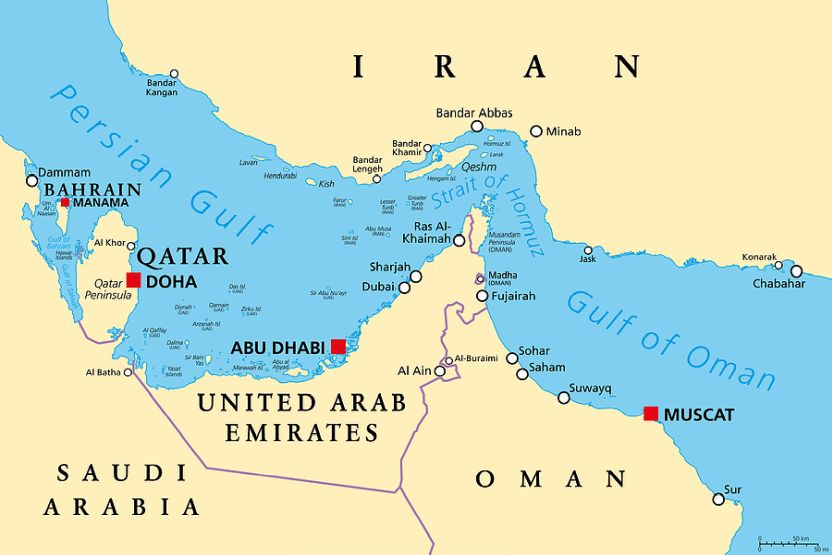
The current stalemate around the Strait of Hormuz still offers plenty of room for positive surprises and alternative scenarios, but with every additional day of no resolution, such negative consequences become more feasible and likely.
Savvy, experienced investors understand making choices is not about knowing what happens next. It's not even about specific strategies or one's level for risk appetite.
Successful investing is about managing risk.
Right now, the one key question every investor should be asking is: am I prepared for worse outcomes and a lot more pain? If not, it's still not too late to make amendments.
In recent writings, I suggested using this crisis to build a better quality portfolio, with the aim of upgrading one's investment performance over the longer term.
That suggestion still stands. But we should at the same time not remain blind to the fact the current crisis may only have just begun, and thus a lot more negative news might still be forthcoming.
Last week, I was invited to join the investment committee at AuzbizTV. Their theoretical portfolio had 6% in cash. My first question was: does anyone think that's enough cash, given circumstances?
In similar fashion, the FNArena-Vested Equities All-Weather Model Portfolio is currently sitting 21% in cash, in addition to 6% exposure to gold (ETF).
I am questioning almost on a daily basis whether this is a sufficient buffer against further mayhem, without sacrificing too much of the upside potential in case of positive surprise.
Today's Winners & Losers
Cash is not the only option in the current environment, of course. The disruptions stemming from the war in Iran are creating both winners and losers, albeit more of the latter.
Plus it's essential to keep in mind investors' perception of winners and losers will change as this process plays out over a longer-term framework.
The full story is for FNArena subscribers only. To read the full story plus enjoy a free two-week trial to our service SIGN UP HERE
If you already had your free trial, why not join as a paying subscriber? CLICK HERE