
Commodities | May 20 2026

This story features IGO LIMITED, and other companies.
For more info SHARE ANALYSIS: IGO
The company is included in ASX100, ASX200, ASX300 and ALL-ORDS
Iran conflict’s ongoing impact on oil, agri-commodities and gold, while lithium prices strengthen.
- Oil prices holding steady; justified?
- Agriculture prices under upside threat
- Short term restraints on the price of gold
- Lithium price seen nearing inflection point
By Greg Peel
Why is the oil price not higher?
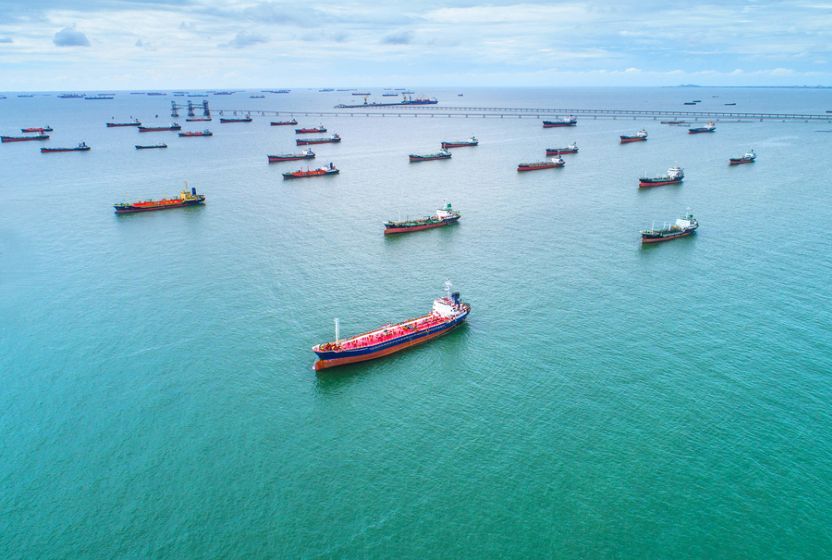
Earlier on in the Iran conflict there were warnings from experts the closure of the Strait of Hormuz could take oil prices as high as US$200/bbl. Yet as the closure drags on for months now, oil prices have remained hovering above US$100/bbl.
Why so?
The prevailing market narrative is supply losses would quickly recover once the Strait of Hormuz reopens, notes ANZ Bank’s commodity analysts. This has discouraged bullish market positions and limited panic buying.
However, this is not the only market narrative. Despite Trump’s constant assurances that oil prices will plummet on the reopening of the Strait, experts warn the backlog of stranded tankers will take some time to clear, and damage to Gulf state oil and gas infrastructure, and Iranian infrastructure, implies a return to pre-war prices will be more of a matter of months.
Drawdowns of strategic oil/fuel reserves across the globe to date will mean these reserves will need not only to be replenished, but likely will be increased above prior levels given the wake-up call provided by the Iran conflict. Hence demand will remain elevated.
Australia is a case in point.
ANZ notes oil market sentiment has been aided by positive messaging from the White House. President Trump has intermittently signalled a deal with Iran is imminent.
Intermittently? More like constantly. The world has lost count of how many times Trump has signalled a deal is close, only to threaten in various ways to destroy Iran if they don’t come up with something acceptable, then to postpone further conflict as another deal is deemed close, typically at the hasty request of Pakistani and/or Gulf State mediators.
Round and round we go.
Physical markets are nevertheless showing few signs of an oil supply crisis, ANZ notes, particularly in the US where commercial crude oil stocks remain relatively high. US fundamentals play a critical role in global price formation, contributing to relatively sanguine investor sentiment.
High inventory levels in Asia have also helped buffer supply losses. ANZ estimates China’s crude oil reserves to be around 1.7bn barrels, with high levels also in Japan and South Korea, but to a lesser extent.
Morgan Stanley points out seaborne oil exports from the US have surged, up an unexpectedly large 3.8mb/d year on year in the 30 days to May 11.
This has been aided by -0.5-1.0 mb/d of demand rationing. China’s imports have fallen sharply while many Asian countries have rationed supply or mandated four-day work weeks to reduce demand, ANZ notes.
China has been willing to let its seaborne imports slide, down -5.5mb/d year on year in the same 30 days, seemingly preferring to use inventories instead.
The release of strategic reserve releases has also softened the blow. The International Energy Agency reported as of May 8, 164mbbl of oil have been released from emergency stockpiles in member countries. The drawdown in the US Strategic Petroleum Reserve has also accelerated in recent weeks.
This has shielded the rest of the world but neither lower imports or reserve releases seem sustainable long run, Morgan Stanley suggests, posing the question what will happen first? Strait of Hormuz reopening? Or reversal in flows?
The latest tick up in oil prices came as Trump again made threats, but he has now backed off yet again.
ANZ points to reports the Trump administration is considering a potential revival of “Project Freedom” –-the accompaniment of tankers through the Strait-– which was initially withdrawn around five minutes after announcement.
Satellite data suggest activity at Iranian oil export facilities has dropped sharply over the past week, ANZ notes. This could emerge in the form of lower exports in the coming days/weeks if the US blockade remains in place.
There is a risk of adjustments to alternate pipeline usage in Saudi Arabia, the UAE and Iraq, which continue to reroute around 5mb/d of crude to offset lost flows through the Strait.
Iran may yet employ the Houthis in Yemen to effectively close the Red Sea, as was the case last year, blocking Saudi exports. There is also a bypassing pipeline through the UAE which is open to Iranian attack.
OPEC data showed April oil output at a two-decade low. With the UAE electing to leave OPEC, the way is open for other members to defy quotas and increase production.
They always do anyway.
Morgan Stanley’s base case is the Strait of Hormuz will reopen, which underpins forecasts. However, a closure longer than China or the US can sustain current flows could cause renewed tightness.
In other words, don’t dismiss the potential for higher oil prices just yet.
Agricultural Commodities
Oil hogs the limelight, but the closure of the Strait of Hormuz has equally reduced the supply of other products.
Agriculture price risks are heavily skewed to the upside over the next 6-12 months, Citi warns, as they face major supply risks resulting from a potential prolonged closure of the Strait of Hormuz, and from likely adverse weather related to El Nino (with the only question being how bad the weather impact will be for net global food production).
Citi points out a prolonged Strait closure would drive up the cost of agriculture production (via higher energy prices), reduce crop yields/output (owing to lower fertiliser availability and lower crop disease protection from oil-based fungicides/pesticides), and drive up demand for some agricultural commodities (as biofuels to substitute for high-priced fossil fuels).
A “strong” El Nino would disproportionally impact yields on major agricultural products, while regional yield divergence will contribute to higher volatility for the rest of grains and Arabica coffee.
Food price inflation has yet to make itself fully felt.
Precious Metals
The gold price rose to over US$5300/oz in late January before a blow-off top that saw the price down to US$4600.
A subsequent rally was soon upended in March by the Iran conflict and prices are now sitting between US$4400-4600/oz.
Gold’s inverse relationship with US interest rates has strengthened since the Middle East conflict escalated through March, ANZ Bank analysts note.
As the US ten-year yield has climbed above 4.6%, gold’s risk reward profile has deteriorated, prompting investors to unwind their positions.
Simultaneously, gold has shown a strong negative correlation with oil during the latter’s supply shock and a relatively positive correlation with equity markets. This indicates to ANZ the gold market is not yet positioned for a risk-off scenario.
ANZ believes inflation expectations, higher yields and a stronger dollar are likely to keep gold under pressure in the near term. The macro backdrop should eventually turn supportive for investment flows into gold over the medium to longer term.
Central bank demand remains robust and is likely to strengthen further this year, ANZ suggests, amid heightened geopolitical risks. Firmer demand from China will likely counter India’s weaker demand after the latter’s policy changes.
ANZ thinks the oil market is not yet fully reflecting the magnitude of supply disruptions, leaving upside risk to prices. This will fuel inflation expectations and keep the Fed cautious, with policy rates on hold until September, and any subsequent move will be data-dependent.
This backdrop presents a short-term headwind for gold.
The supply-shock-driven energy crisis will eventually decelerate economic growth, lowering industrial activity and weakening consumer spending.
Slowing economic growth will see central banks pivot towards more accommodative monetary policy over the coming year, ANZ suggests, which would ultimately support gold prices.
ANZ expects support around US$4,500/oz and views any further downside risk as an opportunity to build fresh positions.
Silver has taken a different path to gold lately, with prices climbing to US$87/oz and driving the gold-to-silver price ratio down to below 60x.
While higher oil prices are raising economic growth concerns, a strong rally in technology stocks is supporting the narrative of strong industrial demand for silver. This was evident in silver moving in tandem with copper.
Overall, ANZ believes silver looks vulnerable in the near term, as spot supplies appear comfortable and Chinese demand is likely to moderate from recent elevated levels.
Over the longer term, ANZ suggests a sustained market deficit and structural demand drivers should continue to underpin investor interest and provide support to prices.
Lithium
Lithium prices have continued to trend higher, Macquarie notes, with spot spodumene trading above US$2,800/t and China lithium carbonate at around US$28,000/t.
Macquarie sees US$29,500/t lithium carbonate equivalent (LCE) as a potential inflection point where investor fear of missing out (FOMO) begins to encounter a psychological resistance level.
Market sentiment has continued to improve but Macquarie cautions that positioning has become increasingly constructive, with many investors anticipating a near-term price spike linked to potential Zimbabwe export disruptions, which may materialise with a lag of some 1.5 months due to shipment timing.
The Zimbabwean government has announced plans to ban the export of lithium concentrates starting in January 2027. This policy aims to promote local processing and value addition within the country, shifting from being merely a raw mineral exporter to a hub for lithium battery supply chains.
The government encourages mining companies to invest in local processing facilities to ensure all lithium leaving the country will be in a processed form by 2027.
Lithium carbonate price volatility remains a key sensitivity for downstream demand.
Macquarie’s recent channel checks suggest US$29,500/t LCE represents a threshold at which energy storage system (ESS) project economics in Southeast Asia and domestic China begin to face pressure, while US$36,800-US$44,200/t LCE is viewed as more broadly disruptive, including for the US and EU markets.
Consistent with this, data show China’s automobile manufacturing profit margin declined to 3.2% in the March quarter, from 3.4% in the December quarter and 4.1% for 2025.
Among Australian-listed lithium miners, IGO Ltd ((IGO)) remains Macquarie’s preferred exposure, screening attractively across price scenarios in FY27-FY28.
IGO also delivers the largest improvement in free cash flow yield (double-digit) at spot prices, reflecting the absence of major capex requirements over the next two years.
PLS Ltd ((PLS)) exhibits elevated earnings sensitivity, Macquarie notes, with a circa 16% earnings impact for a 10% lithium price move. Elevra Lithium ((ELV)) also shows strong operating leverage, with a 10% increase in spodumene prices driving earnings forecast upgrades of 18% in FY27 and 7% in FY28.
On valuation, Elevra’s net present value is most sensitive, on Macquarie’s modeling, rising 16% for a 10% price uplift, followed by PLS at 15%, while Liontown Resources ((LTR)) and IGO each show circa 12% sensitivity.
On implied pricing, Liontown screens highest at US$1,500/t spodumene, followed by PLS at US$1,400/t, IGO at US$1,300/t, and Elevra at US$1,150/t, reflecting stronger leverage and near-term volume ramp-up.
Find out why FNArena subscribers like the service so much: “Your Feedback (Thank You)” – Warning this story contains unashamedly positive feedback on the service provided.
FNArena is proud about its track record and past achievements: Ten Years On
Click to view our Glossary of Financial Terms
CHARTS
For more info SHARE ANALYSIS: ELV - ELEVRA LITHIUM LIMITED

For more info SHARE ANALYSIS: IGO - IGO LIMITED
For more info SHARE ANALYSIS: LTR - LIONTOWN LIMITED
For more info SHARE ANALYSIS: PLS - PLS GROUP LIMITED