
Commodities | Jul 08 2026

This story features GREATLAND RESOURCES LIMITED.
For more info SHARE ANALYSIS: GGP
The company is included in ASX100, ASX200, ASX300 and ALL-ORDS
A glance through the latest expert views and predictions about commodities: El Nino's impact on agriculture and on LNG; the outlook for oil; marginal gold producers.
- El Nino to impact agricultural commodities, but not in uniform fashion
- Is a double whammy building for LNG's supply-demand deficit?
- How's that Strait re-opening going for crude oil transports?
- Not all gold producers are equal, Moelis asserts
By Greg Peel
El Nino and Agriculture
The US’s National Oceanic and Atmospheric Administration [or what’s left of it following DOGE cuts] has reported the probability of a strong, potentially record-breaking, El Nino over November–January, placing this episode among the most significant since 1950.
El Nino typically brings hotter, drier weather to Asia, Australia and West Africa, while lifting rainfall across parts of South and North America, ANZ Bank researchers note.
This should support soybean, corn and wheat crops in the Americas, but raise production risks for rice, palm oil, cocoa and sugar across Australia, India and Southeast Asia.
The war in Iran has led to fertiliser shortages and energy disruption which will likely complicate the weather effect, ANZ points out.
Grains are geographically diversified, so losses in one region can be partly offset by supply from elsewhere. But cocoa, coffee and palm oil are more vulnerable because production is concentrated in a few regions.
ANZ suggests this episode could resemble El Nino events in 1997–98 and 2015–16 [both leading to devastating droughts in Australia], when palm oil, rice and cocoa output fell sharply.
The scale of any production losses will depend on the duration and intensity of the event.
El Nino and LNG, Iran and that Strait
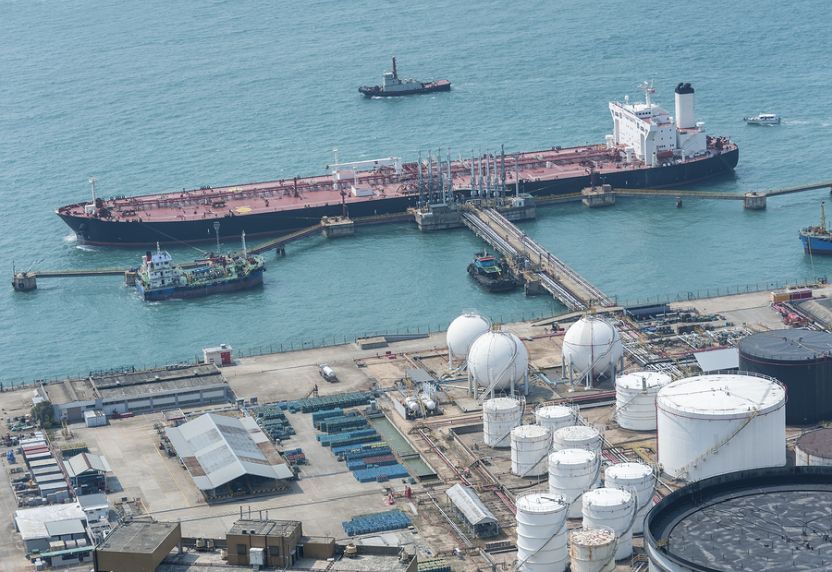
The Strait of Hormuz has reopened, to an extent, but as late as Wednesday Iran has fired on commercial vessels and the US has struck back.
The reopening of the Strait has reduced the risk of outright supply loss, but ANZ Bank notes LNG shipping flows are recovering much more slowly than crude oil, leaving effective export capacity constrained well into the September quarter 2026.
The reopening of a shipping route does not necessarily imply the immediate restoration of shipping activity, ANZ warns. The LNG market experienced a similar dynamic following attacks on commercial shipping in the Red Sea during 2024.
Even where passage remained technically possible, many shipowners and insurers avoided affected regions because of elevated security risks.
ANZ believes a similar pattern is likely to emerge in the Persian Gulf. Although LNG exports may resume, tanker operators are unlikely to immediately return to normal operating practices.
Empty LNG vessels required to load cargoes in Qatar may be slower to enter the Gulf, insurers may maintain elevated war-risk premiums, and players may demand greater compensation for accepting operational risks.
As a result, effective LNG export capacity is likely to remain below normal levels well into the September quarter despite the formal reopening of the Strait.
Then there’s El Nino.
ANZ Bank notes the emergence of a strengthening El Nino considerably increases the significance of delayed LNG normalisation.
Weather risks were expected to emerge after logistics conditions had largely stabilised but ANZ now sees a material probability that El Nino-driven demand growth arrives while LNG shipping disruptions are still constraining supply availability.
This combination matters because historical El Nino events have generally been associated with warmer-than-normal temperatures across North Asia, particularly Japan, South Korea, Taiwan and parts of China.
If current forecasts prove correct, electricity demand for cooling could increase materially during the northern hemisphere summer.
Gas-fired power generation increasingly acts as the marginal source of electricity supply across Asia. Higher cooling demand therefore translates directly into stronger LNG consumption.
The impact extends beyond air-conditioning demand.
El Nino has historically reduced rainfall across parts of Southeast Asia and Latin America, lowering hydroelectric generation. Reduced hydro output often requires replacement generation from gas-fired power plants, further boosting LNG demand.
ANZ notes the combination of stronger cooling demand and weaker hydro generation creates a powerful bullish demand impulse for LNG.
This comes at a time when the market’s ability to access Persian Gulf supply remains impaired.
Oil and that Strait
UBS has moved to cut its near-term oil price forecasts to reflect the US-Iran memorandum of understanding and increased oil flows via Hormuz.
UBS’ 2026 Brent average falls -US$9/bbl to US$84/bbl with 2027 down -US$10/bbl to US$75/bbl. Lower geopolitical risk and quick rebound in flows have led to a steeper price decline than UBS had expected.
Prices are projected to bounce back slightly to US$80/bbl in the second half 2026 [from closer to US$70/bbl currently] as floating storage in the Gulf normalises and demand picks up.
The analysts also see a higher risk premium as likely to return as the MoU has not fully resolved the situation and the path to normalisation could remain bumpy.
The need to refill inventories should still support prices through 2027 but the required inventory rebuild is smaller than UBS previously expected at circa 1bn barrels. The analysts leave their long-term forecast unchanged at US$75/bbl from 2028.
UBS’ analysis indicates that oil flows out of Hormuz have averaged close to 10mb/d over late June. Combining with bypass (pipeline) volumes of 5mb/d, Strategic Petroleum Reserve releases in excess of 2mb/d and reduced Chinese imports to the tune of -5mb/d, the market is oversupplied in the very near-term, as reflected by the oil curve flipping into contango [futures prices rising over time].
Crude loadings have not recovered materially yet, UBS notes, suggesting that we could see drop in exports before they get closer to normal. Comments from Gulf countries point to a fairly quick production ramp-up and confidence around return to normal.
The framework of navigation through Hormuz has yet to be finalised and further attacks, as we have seen in the past few weeks, could drive temporary slowdowns.
The risk is that after the 60-day “ceasefire” defined by the MoU, Iran looks to charge “fees” for passage through the Strait. Iran is currently insisting vessels pass via the Iranian coastal route, and is firing on vessels trying to take the Oman coastal route.
Insurance premiums remain elevated and will likely do so until there is a definitive and lasting peace.
Even if the Strait remains “open”, added costs will pass through to the oil price.
Gold and Operational Leverage
After rocketing into 2026, the gold price has since fallen some -24%.
Moelis notes gold miner margins still look healthy, but earnings and cash flow sensitivity to gold (leverage) should be analysed given recent volatility.
Operating leverage is the key transmission mechanism, Moelis points out. An incremental gold price above mine site cost should convert disproportionately to cash flow, but the same leverage works in reverse when gold retraces or opex moves higher.
Moelis finds some mining operations are managing to contain inflation while others rely on the gold price to absorb labour, consumables and other cost pressures.
Cost inflation can still arrive through familiar channels. Firstly, through traditional inflation in wages, power, fuel and consumables.
Secondly, when lower grades or higher-cost ounces only become economic at elevated gold prices. And finally, through rising sustaining capex (including development) potentially absorbing more operating cash flow.
Over the next 12 months, Moelis would be cautious on gold names for which margin expansion requires a flat or rising gold price rather than controllable site costs.
Moelis prefers producers whose production is supported by a robust mine plan, contained site costs, and appropriate capex reinvestment, rather than producers relying on an elevated gold price environment to justify marginal ounces or delaying capex to protect near-term cash flow.
Having said so, there’s currently only one ASX-listed company that is not Buy-rated at Moelis. Greatland Resources ((GGP)) stands out with a lonely Sell rating.
Find out why FNArena subscribers like the service so much: “Your Feedback (Thank You)” – Warning this story contains unashamedly positive feedback on the service provided.
FNArena is proud about its track record and past achievements: Ten Years On
Click to view our Glossary of Financial Terms
CHARTS
For more info SHARE ANALYSIS: GGP - GREATLAND RESOURCES LIMITED
