
Australia | Jun 23 2026

This story features APA GROUP, and other companies.
For more info SHARE ANALYSIS: APA
The company is included in ASX50, ASX100, ASX200, ASX300 and ALL-ORDS
APA Group offers investors an attractive yield while management pursues new growth opportunities linked to data centres, AI-driven electricity demand and the nation's energy transition.
-Data centres create a new growth pathway for APA Group
-Attractive yield backed by contracted earnings
-Gas remains critical to energy security
-Analysts strongly divided on current valuation
By Mark Woodruff
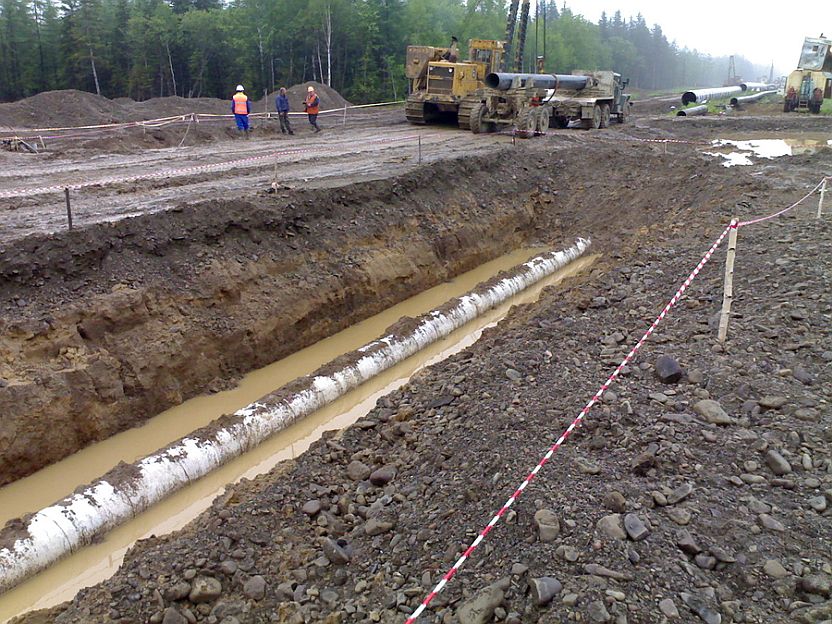
Shareholders in Australia’s largest natural gas infrastructure business APA Group ((APA)) may receive additional rewards from the group’s contracted power generation, given ever increasing energy demand to support strong growth in AI infrastructure, i.e. data centres.
New gas basins under development, including the Northern Territory’s Beetaloo Basin, present additional volume growth opportunities for the company’s extensive network of gas pipelines.
Management’s strategy is “to be a partner of choice in delivering infrastructure solutions for the energy transition”.
To that end, the group not only owns and operates gas transmission pipelines, but also gas storage facilities, electricity transmission assets, and power generation infrastructure.
APA reports through three core operating segments: Transmission Infrastructure includes a gas pipeline network; Power Infrastructure comprises gas-fired generation, renewable energy and electricity transmission assets; and Asset Management earns fees from managing third-party infrastructure investments.
Around 96% of the group’s earnings are gas-related, highlights Morgan Stanley, with circa 33% linked to gas exports.
Citi highlights APA’s resilient earnings base, supported by long-term take-or-pay and regulated gas contracts with high-quality customers, alongside embedded CPI-linked revenue growth.
Morgan Stanley adds APA’s dividend yield is the safest across it ASX research coverage.
When reliable power supply is required
APA Group’s Gas Powered Generation (GPG) business owns and operates assets that convert natural gas into electricity, primarily in regions where reliable power supply is essential.
The portfolio includes gas-fired power stations, which can rapidly increase output when electricity demand rises or renewable generation declines, and hybrid energy systems that combine gas generation with solar and battery storage.
These assets provide dispatchable electricity, allowing power to be supplied on demand and supporting grid reliability when intermittent renewable generation is unavailable.
APA’s portfolio was significantly expanded through the acquisition of Alinta Energy Pilbara in 2023, strengthening exposure to electricity supply for mining, industrial and remote operations.
The data centre opportunity
Investors have recently focused on opportunities within APA’s Power Infrastructure segment to supply electricity to data centres, particularly AI-related facilities requiring large, reliable power sources.
Morgan Stanley forecasts Australian data centre IT capacity will expand to 3.7GW by 2030 from approximately 1.5GW currently. The broker’s bull case rises to 5.1GW, though many industry participants believe these projections remain conservative.
In new research released this week, Citi highlights “behind-the-meter”/contracted power solutions is a potentially significant growth avenue, whereby the group provides dedicated gas-fired, renewable or hybrid power generation directly to data centre operators.
At interim results in February, management stated it would prioritise growth in markets where APA has clear competitive advantages and attractive returns. Contracted power generation on the east and west coasts of Australia was noted with an addressable market of around $40bn, with further potential upside due to AI and data centre growth.
A further circa $33bn addressable market was also highlighted for remote contracted power generation with reference to the Pilbara region in WA, along with further opportunities in Mount Isa and Kalgoorlie mining regions.
Future is not without risks
A key long-term risk for APA Group remains movement away from the usage of gas.
Despite recent diversification, APA is still a predominantly gas infrastructure business, with the segment contributing around 85% of FY25 earnings. Contracted power generation accounts for approximately 14%, while electricity transmission contributes the balance.
Providing some reassurance, Origin Energy ((ORG)) chief executive Frank Calabria, speaking at the Australian Energy Council conference in Sydney on June 4, noted gas is a strategic asset and an essential backstop for a power system increasingly reliant on intermittent renewable generation.
Citi explains a key risk is the further extension of coal-fired power stations, which could reduce demand for gas-powered generation (GPG).
While the expiry of the Wallumbilla Gladstone Pipeline contract in 2035 presents a medium-term challenge, Citi believes this could be partly offset by upside from future Beetaloo Basin developments, which are incorporated into its valuation on a 10% risk-weighted basis.
Power demand from data centres
Macquarie notes APA has increasingly highlighted opportunities within the gas-powered generation market, driven by the retirement of ageing coal-fired power stations and rapidly growing electricity demand from data centres.
Citi agrees supplying power to data centres is a potentially significant growth opportunity for APA, given the rapidly rising electricity demands from AI infrastructure.
Through its contracted power generation business, APA is exploring both behind-the-meter and grid-connected energy solutions, leveraging its portfolio of gas-fired and renewable assets. The broker notes global forecasts point to annual growth of more than 19% in the behind-the-meter market through 2035.
Macquarie observes some data centre developers are actively evaluating open-cycle gas turbines (OCGTs) to meet part or all of their electricity needs. While these projects are likely to be smaller than APA’s 400MW Brigalow generation assets in Queensland, Macquarie expects the underlying economics to be similarly attractive.
Analysts at Citi highlight developments in the US, where midstream infrastructure operators are already securing large data centre power contracts, suggesting similar opportunities could emerge for APA as Australia’s data centre sector expands.
Citi points to Williams Cos Inc (ticker code WMB.N) and Kinder Morgan (KMI.N) as comparable US energy infrastructure operators with exposure to both transmission networks and power generation.
The Australian government is increasingly encouraging data centre operators to offset growing electricity demand through investment in renewable energy and storage projects.
While the valuation impact is difficult to quantify, Citi believes such policy support strengthens the long-term demand outlook and could help APA trade towards the upper end of its historical valuation range.
Significant investment in gas storage
Pipeline capacity alone may not be enough to meet future gas demand.
Macquarie believes growth in gas-powered generation will drive significant investment in gas storage, an area of core expertise for APA.
The analyst notes the East Coast Gas Grid has sufficient spare capacity to support only around 600MW of additional continuous gas-fired generation, before allowing for gas demand from replacing retiring power stations in southern markets.
As a result, the broker expects onsite generation and gas storage solutions, such as APA’s Kurri Kurri and Brigalow projects, to play an increasingly important role in supporting utility-scale energy projects and data centres.
This is expected to create an additional source of demand for APA, even where the company is not directly awarded gas-powered generation contracts.
Australia’s energy transition
Citi acknowledges long-term headwinds from declining gas consumption, but believes these are likely to be offset by gas’s critical role in Australia’s energy transition, including replacing retiring coal-fired generation and supporting periods of peak electricity demand.
Citi notes APA is already positioned to benefit through its $3bn East Coast Gas Grid expansion program, while further upside could emerge from additional infrastructure projects linked to the Beetaloo Basin in the Northern Territory, which is currently assigned a modest risked valuation in Citi’s modeling.
APA owns the Northern Gas Pipeline, which connects the Northern Territory. If gas production from the basin expands as expected, additional pipeline capacity and transmission infrastructure will likely be required to transport gas to eastern Australian markets.
The company could also benefit from higher utilisation of its existing assets, as increased gas flows from the Northern Territory would boost throughput across APA’s pipeline network, supporting earnings growth without necessarily requiring significant additional capital investment.
Views & valuation
Now Citi has initiated coverage on APA Group with an $11.00 target, the average target of six daily monitored brokers in the FNArena database has risen to $9.37 from $9.03.
This is indicative of a wide range in assessed valuations, with Morgans and UBS the low markers on $7.96 and $8.00 respectively.
Yesterday’s closing share price of $10.31 is only a smidgen below targets set by Morgan Stanley and Macquarie. Citi’s $11 target is the new high mark at 7.66% above the share price.
Citi joins Macquarie as the only two Buy-equivalent raters. Morgan Stanley’s Equal-weight rating translates into a Neutral/Hold.
Not surprising, three other brokers have a negative view given their targets are below the share price.
On current consensus forecasts (derived from the six brokers mentioned) the shares are offering dividend yields of 5.6% for FY26 and 5.7% for FY27.
The annual payout to shareholders has increased by 1c in each year since 2023 and consensus expects this pace to continue in the years ahead.
Paying subscribers can check out the details via Stock Analysis on the website.
Morgan Stanley labels APA as the safest dividend yield provider under its research coverage, but also notes faster DPS growth is available through Cleanaway Waste Management ((CWY)) and Transurban Group ((TCL)).
Outside of daily coverage, Jarden (similar to UBS and Morgans) has not refreshed its research since interim results in February. Its Overweight rating seems to conflict with a target of $9.40 only.
In a research update released this morning, Citi highlights APA Group as its preferred Australia/New Zealand infrastructure stock. In the broker’s survey of 26 investors, around 40% selected APA as their preferred infrastructure investment.
Find out why FNArena subscribers like the service so much: “Your Feedback (Thank You)” – Warning this story contains unashamedly positive feedback on the service provided.
FNArena is proud about its track record and past achievements: Ten Years On
Click to view our Glossary of Financial Terms
CHARTS
For more info SHARE ANALYSIS: APA - APA GROUP

For more info SHARE ANALYSIS: CWY - CLEANAWAY WASTE MANAGEMENT LIMITED
For more info SHARE ANALYSIS: ORG - ORIGIN ENERGY LIMITED
For more info SHARE ANALYSIS: TCL - TRANSURBAN GROUP LIMITED